Erectile dysfunction in your 50s
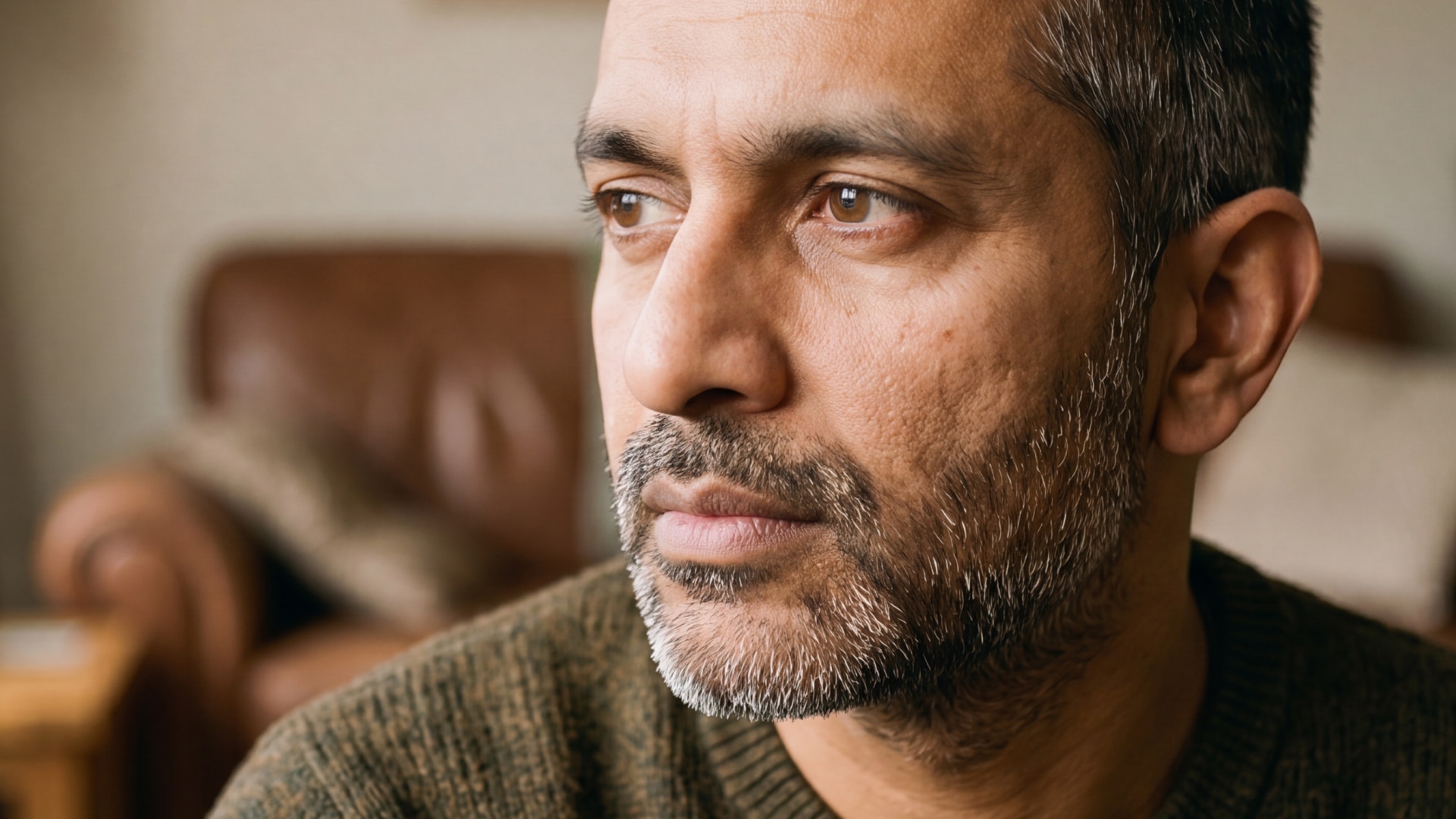

Erectile dysfunction becomes more common as men move through their 50s, and for most men it isn't one single cause. It's usually a mix of physical health changes, psychological load (stress, relationship changes, low mood), and lifestyle factors. Here's the encouraging part: once you understand what's driving it, a lot of it starts to ease. Often, simply learning what helps and what doesn't relieves much of the problem, and most men see real improvement with the right approach. This guide covers what's actually going on, when sudden changes are worth flagging to a doctor, and what helps, without the panic or the shame.
How common is erectile dysfunction in your 50s?
Erectile dysfunction (ED) becomes more common with age, and it's a normal, common experience for men in their 50s. It isn't a sign that anything is uniquely wrong with you.
Plenty of guides on this topic throw out a specific percentage for each decade. We're not going to do that here. The most commonly cited “50% by your 50s, 60% by your 60s” figure gets repeated everywhere, but it isn't traceable to any specific study or research. We'd rather tell you plainly that ED gets more common with age than hand you a number we can't back up.
What we can tell you with confidence: ED is one of the most common reasons men in their 50s see a doctor about their sex life, and most of the time, more than one thing is contributing to it. Read more on erectile dysfunction if you want the fuller picture before diving into the 50s-specific detail below.
Signs of erectile dysfunction in your 50s
The signs are difficulty getting hard, difficulty staying hard, or losing your erection before you finish, when it happens more than occasionally.
Watch for:
- Not being able to get as hard as you'd like
- Having a hard time getting hard at all
- Struggling to stay hard once you're there
- Losing your erection before you finish
A single off night doesn't count. Stress, a few drinks, or being exhausted can affect any man's erection at any age. What matters is the pattern. If this is happening regularly rather than once in a while, it's worth understanding why, because the cause changes what actually helps.
What causes erectile dysfunction in your 50s?
Erectile dysfunction in your 50s is usually driven by physical health changes, psychological load, and lifestyle factors. For most men it's more than one of these at once, often physical and psychological together rather than one or the other. Working out how much is physical and how much is psychological is a useful first step, since it points you toward what to try first.
Physical causes
Your risk of several health conditions rises through your 50s, and many of them affect blood flow or hormone levels in ways that show up in your erections. Cardiovascular conditions like high blood pressure, high cholesterol, and clogged blood vessels can restrict blood flow directly. Diabetes affects the nerves and blood vessels involved in getting hard. Some medications, especially for blood pressure or depression, list erection changes as a side effect. Prostate-related treatment and falling testosterone levels can also play a part.
These conditions often show no symptoms of their own, which is exactly why erection trouble matters. It's sometimes the first sign your body gives you that something else needs a doctor's attention.
Psychological causes
Stress is the biggest psychological driver, and your 50s tends to bring a specific kind of it: aging parents, teenage or adult kids, career pressure, relationships that are shifting, and a body that looks and feels different than it used to. On top of that, the conversations that might help, the honest and slightly tricky ones with a partner, can feel daunting to start. Understanding psychological erectile dysfunction helps explain why stress and erections are so closely linked.
Relationship change is a major factor too. Divorce among adults 50 and older, sometimes called “gray divorce,” has roughly doubled since the 1990s (Stepler, 2017). A relationship ending or changing can knock your confidence, and starting a new sexual relationship after years with one partner can bring on performance anxiety. That pressure can trigger the exact stress response that shuts down arousal, since your body reads that stress response as a threat and directs blood away from your penis instead of toward it.
Low mood works the same way. The stresses that build through your 50s can tip into something heavier, and low mood and erection issues often feed each other, becoming a loop rather than a single event.
And here's the part that often gets left out: getting older doesn't mean your best sex is behind you. In one large US survey, 73% of people in their late 50s and early 60s were still sexually active (Lindau et al., 2007). Plenty of men find their 50s become a turning point rather than a slow fade, especially when they put their energy into the relationship instead of their age.
Lifestyle causes
Smoking, heavy drinking, poor sleep, a diet that's mostly convenience food, and recreational drug use all make erections harder to come by. None of these need an overhaul overnight. Small, consistent changes tend to do more than one dramatic reset that doesn't last.
| Cause category | Common examples | What it usually looks like |
|---|---|---|
| Physical | Cardiovascular conditions, diabetes, medication side effects, prostate treatment, lower testosterone | Erections that are consistently harder to get or keep, often with no other symptoms at first |
| Psychological | Stress, relationship change or gray divorce, performance anxiety with a new partner, low mood | Erections that come and go depending on the situation or your headspace |
| Lifestyle | Smoking, heavy drinking, poor sleep, poor diet, recreational drug use | A gradual decline that tracks with habits over months, not a single sudden change |
Sudden erectile dysfunction at 50: what's different
ED can start suddenly, and sudden onset points toward specific causes: acute stress, a specific medication change, or in rare cases a cardiovascular event. That's different from the gradual pattern behind most physical and lifestyle causes.
A single stressful event, in or out of the bedroom, can affect your erection the same night. A heavy night of drinking or a bad night's sleep can do the same. Physical causes tend to build slowly instead. Chronic conditions like diabetes or heart disease develop over years, not overnight.
| Onset pattern | Likely cause | What to do |
|---|---|---|
| Gradual onset | Physical or lifestyle build-up over months or years | Make an appointment with your doctor to get it checked, rather than waiting for a routine visit that may not come |
| Sudden onset | Acute stress, a new medication, or rarely a cardiovascular event | Worth a prompt doctor conversation, same week rather than “whenever” |
If erection trouble shows up suddenly alongside chest pain, dizziness, or shortness of breath, treat that as a reason to get medical care right away, not something to wait out.
Treatment options and what actually helps
Rule out physical causes with a doctor, then work the psychological and lifestyle side. Most men see improvement without needing to tackle everything at once.
Start with your doctor
Talking to your doctor about ED matters more in your 50s than it did in your 30s, since your cardiovascular risk climbs with age and erection trouble is sometimes the first sign of it. A doctor can check for the physical causes covered above and rule out anything that needs direct medical attention. If a physical cause turns up, your doctor may suggest a medication change, blood pressure or cholesterol treatment, or another option specific to that cause.
Work on the psychological pattern
If your erections are inconsistent rather than consistently absent, the pattern behind it is usually trainable. Dr. Shannon Chavez, the psychologist and sex therapist behind The Erection Reset, works with exactly this pattern in her clinical practice.
That work is as much about your mind as your body. Your brain is your biggest sex organ, and your nervous system plays a big part in your erections. When it senses a threat, whether that's stress, self-consciousness, or the pressure of a new partner, it shuts arousal down automatically. That's a pattern, and patterns can be retrained through structured practice, which is the approach The Erection Reset is built on. Opening up to a partner, a friend, or someone you trust also helps more than most men expect. The Erection Reset also includes private, judgment-free AI conversations, built around Dr. Chavez's approach, so you can work through this in your own time.
One of the biggest reliefs men find here is letting go of the idea that an erection has to be rock hard, every time, to count. Erections can come and go during sex, and that's normal, not a red flag. A lot of men are surprised to find that once they stop chasing a “perfect” erection, sex gets more relaxed and more pleasurable, not less. Taking the pressure off is often exactly what helps.
Talk to your partner
A lot of the time, couples just aren't talking about what's going on. Each person is left guessing what the other feels or needs, and that silence adds pressure that makes everything harder.
You don't need the perfect words. Naming it together, that things have changed and you want to figure it out as a team, is often where things start to shift. It takes the weight off you as the only one carrying it, and turns something you're hiding into something you're working on together.
If starting feels daunting, keep it honest and simple: tell your partner what you've noticed and that you want to work through it with them.
Adjust the basics
Cutting back on smoking and alcohol, eating better, sleeping more, and moving your body more all support better erections over time. None of these work overnight, and none of them require perfection. Small, sustained changes beat a strict plan you abandon in three weeks.
Here's what getting better tends to look like in real life. For a lot of men, the shift starts with one realization: that their body was responding to pressure, not to anything being broken. Once that clicks, and once they take the weight off, talk to a partner, and address any physical causes with a doctor, things usually start to move. Progress rarely runs in a straight line, but most men find it does get better, and that it was never as fixed as it felt at the start.
Sources
- Stepler, R. (2017). Led by baby boomers, divorce rates climb for America's 50+ population. Pew Research Center. https://www.pewresearch.org/short-reads/2017/03/09/led-by-baby-boomers-divorce-rates-climb-for-americas-50-population/
- Lindau, S. T., Schumm, L. P., Laumann, E. O., Levinson, W., O'Muircheartaigh, C. A., & Waite, L. J. (2007). A study of sexuality and health among older adults in the United States. New England Journal of Medicine, 357(8), 762-774. https://pubmed.ncbi.nlm.nih.gov/17715410/
Mojo aims to provide useful wellbeing resources to its users; however, you should not solely rely on opinions or advice available on the Website or given by the Community. Always seek advice from a qualified medical doctor or other healthcare professional before acting.
About the experts

With 18 years as a psychosexual and relationship therapist, Amanda helps people navigate desire, intimacy, and the changes life brings.






Help is available when you're feeling low – you don't have to suffer in silence. If you're in crisis or struggling to cope, find someone to talk to on Find a Helpline.