A guide to arousal and orgasm creams, gels, and enhancers for women

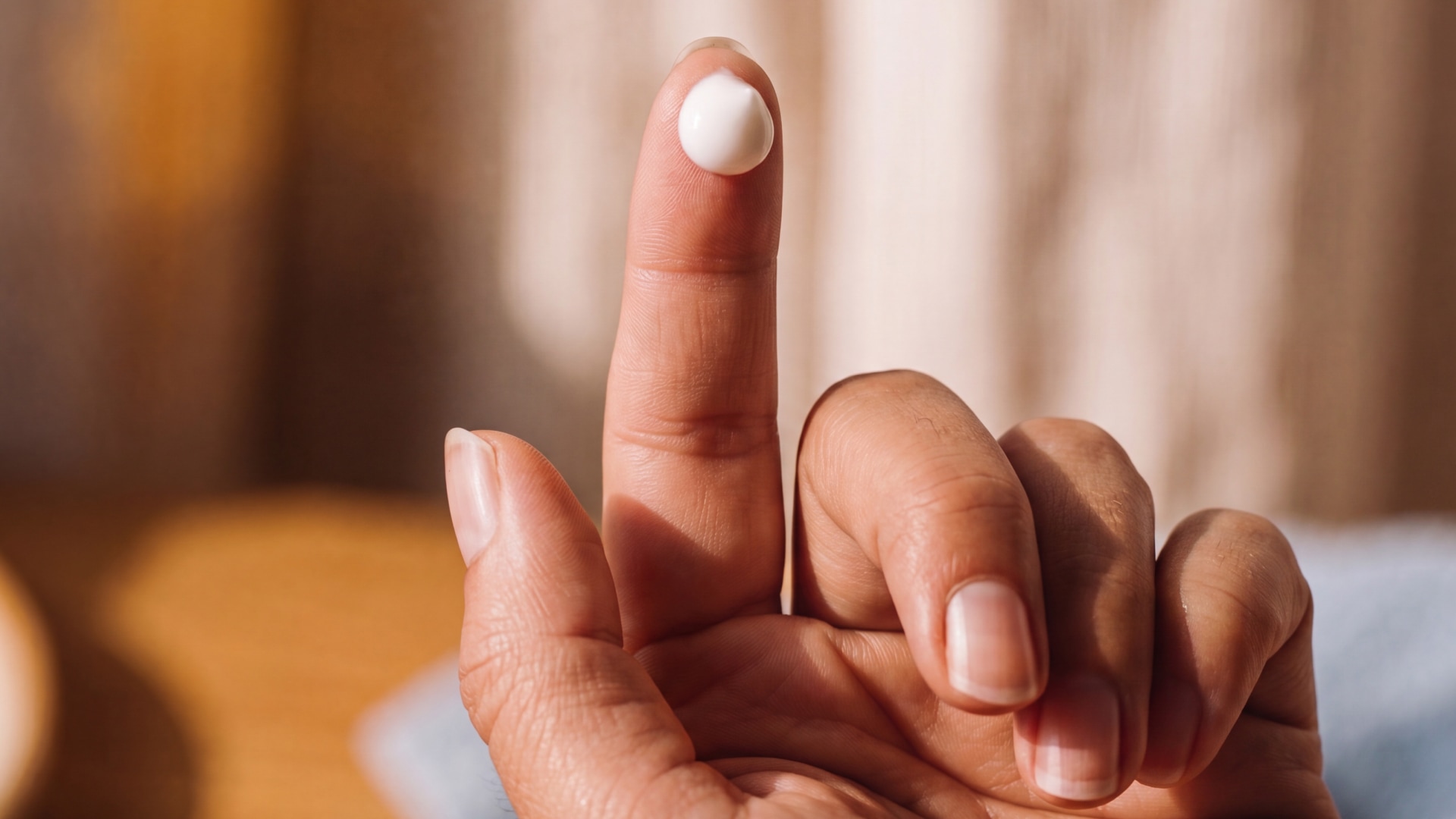

An orgasm cream, also called an arousal cream or sometimes a “scream cream,” is a cream or gel you apply to the vulva to potentially increase blood flow, sensitivity, and arousal before sex. One kind, supported by emerging evidence, contains sildenafil, the same drug used in erectile medication for men, at a much lower dose made for the skin. Other formulas add ingredients like L-arginine or warming agents; none of these have strong research behind them yet.
Mojo’s own orgasm cream, Oh! Cream, was formulated with an OB-GYN and takes a different approach to most products in this category. This guide covers what’s actually in these creams, how to use one safely, and where Oh! Cream fits in.
Orgasm may have benefits that go beyond pleasure, from lower stress (Wehrli et al., 2024) to better sleep (Oesterling et al., 2023), which may matter why regular orgasms matter for more than pleasure. A cream is one tool aimed at making orgasm easier to reach. But it isn’t the only piece of the picture, as this guide gets into later.
What is orgasm cream, and how does it work?
Orgasm cream is a topical cream or gel that may increase blood flow to the vulva and clitoris to potentially boost arousal and sensitivity. The most effective of these contain the ingredient sildenafil.
Sildenafil blocks an enzyme called PDE5, which lets blood vessels relax, a process doctors call vasodilation (Smith & Babos, 2023). Taken as a pill, it’s a medication used in the management and treatment of erectile dysfunction. Applied as a cream to the vulva, it encourages more blood flow to the area, which can support more sensitivity and a fuller arousal response (Johnson et al., 2024).
Why Oh! Cream leaves out cooling agents
Most brands in this category add menthol or peppermint oil for a tingling sensation. Mojo’s own product testing found that many women found that cooling sensation uncomfortable rather than pleasant, especially on sensitive tissue (Mojo, 2026).
Oh! Cream relies on its blend’s potential blood-flow effect instead of a tingling sensation that can mask, rather than support, actual arousal.
What the clinical research on sildenafil cream actually shows
Dr. Suzette Johnson, the board-certified OB-GYN who formulated Oh! Cream, has seen it firsthand:
Her confidence is backed by a growing evidence base. A phase 2b, randomized, placebo-controlled, double-blind trial tested topical sildenafil cream in 200 premenopausal women diagnosed with female sexual arousal disorder (FSAD): 101 used the cream, 99 used a placebo. Over the 12-week trial, a follow-up subgroup analysis found encouraging results in certain groups of participants, though that subgroup excluded women with concomitant orgasmic dysfunction and genital pain, and the study authors noted that women with concomitant orgasmic dysfunction did not benefit as much (Johnson et al., 2024).
Mojo customers report their own results. “It makes reaching climax so much easier,” says Tina. “I’m often ready in ten minutes,” says Katrina, 38. Individual results vary.
Common reasons women reach for an arousal cream
Plenty of things can make arousal take more effort than it used to. Antidepressants, especially selective serotonin reuptake inhibitors (SSRIs), commonly cause this (National Library of Medicine). Menopause, general aging, and high stress are common contributors too (MedlinePlus), along with simply being busy, wanting arousal to happen faster, needing a longer runway than before, and plenty of other reasons.
Mojo doesn’t diagnose any condition, including female sexual arousal disorder, and nothing in this guide replaces a conversation with a doctor. If a persistent change in arousal is affecting you, a doctor is the right person to talk to about what’s going on.
How to use an arousal or orgasm cream safely
Always follow the instructions on your product’s label or from your prescribing physician but in general, these creams are applied to the genitals. They take somewhere around 15 to 30 minutes to start working, so timing matters.
Many women build it into a pre-sex ritual: applying it while getting ready, as part of foreplay with a partner, or solo before masturbation, so it’s already working by the time things heat up. Using more than directed won’t speed things up — it mostly raises your chance of irritation.
If your skin reacts to fragranced products, or you have a history of sensitivity, mention that to your doctor before trying any new topical formula. Where a product comes with a physician consultation, their instructions on dosing and use take priority over anything general written here.
Are there risks, or reasons it might not be the right fit?
Sildenafil-based creams carry the same general precautions as oral sildenafil. Everyone should talk to a doctor before using one, especially anyone with a heart condition or anyone taking nitrate medication. That’s exactly why Mojo requires a consultation before dispensing Oh! Cream.
Sildenafil, in any form, can interact with nitrates in a way that causes a dangerous drop in blood pressure; that’s just one of several possible contraindications a physician checks for. It’s why a physician review, evaluating whether the cream is the right fit for you individually, sits between ordering and receiving a prescription-based cream, rather than a straightforward checkout button.
Beyond that specific interaction, treat any new topical product the way you’d treat anything else applied to sensitive tissue. Patch-test if you’re prone to irritation, avoid applying it to broken or irritated skin, and stop using it and see a doctor if something feels wrong.
Inside Mojo’s Oh! Cream: ingredients, consultation, and how it’s sold
Oh! Cream is a compounded cream that comes with a physician consultation. Its formula combines five active ingredients working toward the same goal from different angles: sildenafil, theophylline, L-arginine, pentoxifylline, and ergoloid mesylates, all chosen with the aim of relaxing blood vessels and helping enhance circulation to sensitive tissue. It’s made in a water-free base for ingredient stability, without the harsh preservatives some formulas need.
Oh! Cream is compounded in an FDA-registered pharmacy under a physician’s prescription. It is not FDA-approved, and the product has not been reviewed by the FDA for safety or efficacy (Mojo, 2026). Mojo itself is LegitScript approved (LegitScript, 2026), the pharmacy industry’s own standard for verifying that an online source operates legitimately.
Oh! Cream costs $49 a month, which includes the initial consultation, ships free and discreetly, and can be cancelled anytime; each order is a 15ml bottle with 30 doses. It’s available on its own or as an add-on when you sign up for Find Your Orgasm. The process runs like this: a 2-minute health questionnaire, physician review typically within 2 hours, and a full refund on the cream if you’re not approved.
Why a cream alone may not close the orgasm gap
In some cases, a cream can help with physical arousal. For most women, the orgasm gap has psychological and relational roots too, which is what the course side of Mojo’s offering is built to address.
The orgasm gap is well documented. About 95% of women reach orgasm during solo masturbation (Kinsey et al., 1953). With a male partner, that number drops to 65%, and in lesbian relationships, it’s 86% (Frederick et al., 2018).
That gap comes down to biological as well as sociocultural reasons, not anatomy alone (Frederick et al., 2018). No cream on the market can close it alone.
That’s where Dr. Laurie Mintz comes in: a licensed psychologist and certified sex therapist, Professor of Psychology at the University of Florida, and author of Becoming Cliterate. She built Find Your Orgasm alongside Dr. Johnson — Mojo’s course for women whose orgasm has changed or hasn’t reliably arrived with a partner, whatever the reason. A short questionnaire at the start routes you to the track that matches your situation, so the course meets you where you are rather than assuming one story fits everyone.
The physical piece matters. So does understanding why the change happened, and knowing what to do next. Techniques that can help you reach orgasm cover that second piece in more depth.
If a physical change is the main thing you’re dealing with, adding Oh! Cream to Find Your Orgasm might be a route worth exploring. If what you’re dealing with reads more like the general orgasm gap, the course on its own is the better place to start. Talking to your doctor will help determine what might be behind your orgasm struggles, as well as what methods might suit you best.
Sources
- Johnson, I., Thurman, A. R., Cornell, K. A., Hatheway, J., Dart, C., Brainard, C. P., Friend, D. R., & Goldstein, A. (2024). Preliminary efficacy of topical sildenafil cream for the treatment of female sexual arousal disorder: A randomized controlled trial. Obstetrics & Gynecology, 144(2), 144–152. https://doi.org/10.1097/AOG.0000000000005648
- Johnson, I., et al. (2024). Subgroup analysis of topical sildenafil cream for female sexual arousal disorder. Sexual Medicine, 12(5), qfae079. https://doi.org/10.1093/sexmed/qfae079
- LegitScript. (2026). Website certification: mymojo.com. https://www.legitscript.com/websites/?checker_keywords=mymojo.com
- Frederick, D. A., St. John, H. K., Garcia, J. R., & Lloyd, E. A. (2018). Differences in orgasm frequency among gay, lesbian, bisexual, and heterosexual men and women in a U.S. national sample. Archives of Sexual Behavior. (Statistic as cited on Mojo’s Find Your Orgasm course page; no public URL.)
- Kinsey, A. C., Pomeroy, W. B., Martin, C. E., & Gebhard, P. H. (1953). Sexual Behavior in the Human Female. W.B. Saunders.
- Wehrli, F. S. V., Bodenmann, G. J., Clemen, J., & Weitkamp, K. (2024). Exploring the role of masturbation as a coping strategy in women. International Journal of Sexual Health. https://pmc.ncbi.nlm.nih.gov/articles/PMC11323945/
- Oesterling, T., et al. (2023). The influence of sexual activity on sleep: A diary study. Journal of Sleep Research. https://doi.org/10.1111/jsr.13814
- Smith, B. P., & Babos, M. (2023). Sildenafil. In StatPearls [Internet]. StatPearls Publishing. https://www.ncbi.nlm.nih.gov/books/NBK558978/
- National Library of Medicine, PubMed Central. Antidepressants and female sexual dysfunction. https://pmc.ncbi.nlm.nih.gov/articles/PMC6711470/
- MedlinePlus, National Library of Medicine. Women and sexual problems. https://medlineplus.gov/ency/patientinstructions/000663.htm
Mojo aims to provide useful wellbeing resources to its users; however, you should not solely rely on opinions or advice available on the Website or given by the Community. Always seek advice from a qualified medical doctor or other healthcare professional before acting.
About the experts






Help is available when you're feeling low – you don't have to suffer in silence. If you're in crisis or struggling to cope, find someone to talk to on Find a Helpline.