“My son has a porn addiction”: A guide for parents and carers

About this guide: This guide is for parents, carers, and guardians of teens and tweens, whatever their child's gender. It isn't advice for young people themselves. Dr Knibbs has written a separate downloadable guide for them. It also doesn't replace a talk with a pediatrician or a licensed therapist who understands porn viewing in young people.
“Teen porn addiction” isn’t a formal medical diagnosis, even for adults, and seeing porn is very common among young people, so finding it doesn’t mean your child is addicted. What matters is whether their viewing feels compulsive and is affecting their mood, sleep, schoolwork, or relationships.
Guidance for parents from the American Academy of Pediatrics says to stay calm, keep the door open for more talks, and avoid shame or punishment (American Academy of Pediatrics, 2023). Dr Catherine Knibbs, a child psychotherapist who specializes in online harm, adds that showing disgust or strong opinions can create shame and close the door on future talks.
What do parents usually feel when they find out?
Panic, guilt, and a lot of questions. Dr Knibbs says parents often come to her with one of these thoughts:
- “I caught my child watching porn.”
- “I searched their internet history and found…”
- “I have failed.”
- “I had parental controls on the device, so how could they see this?”
- “What am I supposed to say or do now?”
- “Does this mean they’re addicted?”
You haven’t failed. Young people today have so much digital access that they’re very likely to see porn at some point, even with safeguards in place. You can’t always prevent that, but a plan and a few ready phrases can make the conversation far less shocking, whether your child is under 13 or almost 18.
This guide talks about “viewing” porn rather than “using” it. Dr Knibbs uses this language because children and teens don’t view porn for the same reasons, or in the same way, as adults.
How common is porn exposure among teens?
Most teens see online pornography before adulthood, often by accident the first time, and often somewhere other than a porn website. It can turn up in games and other digital spaces, or on someone else’s screen.
In a US survey of teens aged 13 to 17, about 73% had watched online pornography, and more than half saw it by age 13 (Common Sense Media, 2023). The American Academy of Pediatrics reports a lower figure for the past year alone: 20 to 38% of 11 to 17-year-olds (American Academy of Pediatrics, 2023).
| Statistic | Common Sense Media (2023) | American Academy of Pediatrics (2023) |
|---|---|---|
| Teens who've seen online porn | 73% of 13–17s (lifetime) | 20–38% of 11–17s (past 12 months) |
| Age of first exposure | 54% by age 13; average age 12 | 15% before age 11 |
| How exposure happens | 58% accidental at least once; 44% intentional (52% boys vs. 36% girls intentional) | Correlates with parenting style: more intentional seeking among teens with authoritarian parents or weaker parent-child relationships |
The two studies measured different time windows. One asks about a teen’s whole life, and the other asks about the last 12 months, so read them as two angles on the same picture.
Why should I treat these numbers with caution?
The real figures are hard to pin down. Young people may not answer surveys honestly, especially if they’re worried about losing their phone or internet access.
Dr Knibbs also points out that research rarely says what “pornography” means. The word might make you picture a professional film or something violent, but porn covers many types and genres, and it can even appear as pixel-art graphics in games.
Much of the research also looks at porn through a Western, heterosexual, and sometimes criminal-justice lens. According to Dr Knibbs, there’s still no research with under-18s that is grounded in child development, trauma-informed, and inclusive. Treat any single statistic with care.
Will viewing porn harm my child?
The honest answer is that research can’t predict what will happen to any one child. Parents often worry about several things at once:
- Will they be harmed?
- Will they become misogynistic?
- Will they get in trouble with the law?
- Will they ever speak to me again?
- Are they addicted, or will they become addicted?
For teens, the research shows links between porn and certain attitudes, without proving one causes the other. A review of 20 years of research found that more frequent porn viewing in teens is linked with more permissive sexual attitudes and more sensation-seeking, alongside weaker family relationships (Peter & Valkenburg, 2016).
The researchers were careful to say the methods in this field can’t prove which one causes which. A teen who seeks out thrills might be drawn to porn, and porn might also feed that tendency. Both are possible, and the research so far can’t separate them.
Is "porn addiction" a real medical diagnosis?
No major diagnostic manual recognizes "porn addiction" by that name. A related condition, Compulsive Sexual Behavior Disorder, is recognized by the World Health Organization.
The World Health Organization’s ICD-11 includes Compulsive Sexual Behavior Disorder as a diagnosable condition, coded 6C72. It’s defined by loss of control and harm to daily life, rather than by how often someone watches porn (Kraus et al., 2018). This framework was developed and studied in adults, and it hasn’t been tested as a diagnosis for teens, so no clinician can use it to formally diagnose your child.
Silva Neves, a COSRT-accredited psychosexual and relationship therapist, works with this framework with his adult clients. As Silva Neves puts it:
That line describes his adult clients, and Neves doesn’t specialize in adolescent development. Still, it points to something useful for parents: porn viewing is rarely the whole story.
Why do young people view porn compulsively?
There are many possible reasons, and the porn itself is rarely the main one. Dr Knibbs lists reasons that include:
- Curiosity. Adolescence is when most people start exploring their sexuality.
- Stress, shame, or low mood. Viewing can become a way to cope.
- Self-soothing or avoidance. It can be a way to escape something hard at home or school.
- Trauma. Viewing can be part of a response to past harm.
- Exploring sexual identity. Some young people are working out who they are.
- Peer pressure. Content may be sent to them as a way of being “initiated” into a group.
- Pranks. This is where children send each other films overlaid with sexual noises or sexual content to shock and confuse.
- Grooming. In less common cases, being shown porn can be part of an adult’s grooming process. If you suspect your child is being groomed, or has been sent porn by an adult, report it. In the US, report to The National Center for Missing & Exploited Children (NCMEC). In the UK, report to the CEOP Command (Child Exploitation and Online Protection Command).
Viewing can become a habit that brings no pleasure at all, or it can be used for self-pleasure. Unlike with adults, it helps to know what type of porn a young person is viewing, because the type can reveal safeguarding concerns. Dr Knibbs has written more on this in her article on safeguarding questions for children and young people who view porn.
Do I need to know why my child is viewing porn?
Not always. Young people often can’t explain why, and asking “why?” usually gets “I don’t know.”
Dr Knibbs compares it to food. You don’t need to know why your child likes fruit to tell them it’s a healthy habit. In the same way, you can talk about porn without knowing the reason behind it, so focus on what you can ask instead.
The reason still matters when viewing feels hard to stop. A habit like that often sits on top of stress, low mood, loneliness, or a shaky relationship with a parent. Mojo’s Break Free From Porn program for adults, and the article on how porn use and erectile function are linked, work from the same idea: porn tends to be the signal of something else going on.
How do I talk to my child about porn without shame?
Pick a relaxed moment, ask more than you tell, and keep each talk short. Move off the topic as soon as you notice discomfort, so the door stays open for next time.
It’s OK to say out loud that this is awkward. Few teens want their parents knowing about their sex life, and naming the awkwardness can ease it.
In a US survey of 1,358 teens aged 13 to 17, half of those who had seen porn said they felt guilty or ashamed afterward. In the same group, 67% said they felt "OK" about how much they watch (Common Sense Media, 2023). Shame is already there for many teens, so skip “how could you?” and keep your views on the porn industry to yourself.
The same survey found that teens were more likely to say they’d learned a lot about sex from a parent or trusted adult (47%) than from porn (27%). Yet only 43% had talked about porn with a trusted adult. Most of those who had said the talk encouraged them to find other ways to explore their sexuality besides porn (Common Sense Media, 2023).
How do I start a conversation with my child about porn?
Choose a low-pressure moment, like a car ride or a walk. Doing something side by side, with a natural end point, can make a hard topic feel easier (Nesi & Nail, 2023).
Opening with a neutral reason, like a new phone, can help. So can asking about "people your age" before asking about your child (Nesi & Nail, 2023). Dr Knibbs suggests setting a limit up front, such as three questions, and sticking to it.
Keep in mind that younger children may not know what the word “porn” means, and using it can add shame. If you know what they actually saw, talk about that.
What should I say in the first talk?
Keep the first talk light. Going straight into heavier topics like misogyny or consent can feel judgmental, so save those for later talks.
- Pick 1 goal before you start (Common Sense Media, 2025). Choose something easy to discuss, so your child comes away feeling it “wasn’t so bad.”
Try: “I want to ask a few questions, so I’ll stop after 3 of them, okay?” - Share your concern in 1 or 2 sentences. Say what you believe, briefly.
Try: “I heard that some videos might make you think that’s the only way to treat a partner, and I’m worried that could happen to you.” - Ask what they think, then listen (Common Sense Media, 2025).
Try: “What do you think of an industry that doesn’t always pay its performers?” - End by telling them they can come back to you anytime (Bombusa, 2024).
Try: “I loved hearing what you thought, and I’m glad you could talk to me. You know I’m here whenever you need to chat.”
In later talks, it helps to cover respect and trust in healthy relationships, and how porn can push people to look or act a certain way (Bombusa, 2024). It also helps to explain that porn is made to earn money or get clicks, and most of it looks very different from real sex and real relationships (Common Sense Media, 2025).
Dr Knibbs runs low-cost talks for parents on how to discuss specific types of content. The advice here is a general starting point.
What should I avoid saying?
Try to skip blame, guilt, and debates. Making a teen feel guilty about what they’ve seen can stop them from coming to you later (Bombusa, 2024). Debating can make teens shut down (Common Sense Media, 2025).
The example wording below is Mojo’s own suggestion.
| Instead of saying... | Try saying... (example wording) | Why it helps |
|---|---|---|
| "What is wrong with you?" | "I saw something on the laptop. Yep, it's awkward for both of us, and I'd like to talk about it with you." | It names what happened calmly and opens the talk. |
| "You're addicted to porn." | "Lots of people your age are curious and watch sexual stuff. How do you feel about how much you watch?" | It treats curiosity as normal. Common Sense Media advises against suggesting that any viewing means addiction (Common Sense Media, 2025). |
| "That's disgusting." | "Porn is made to get clicks, and they want you to come back for more. What do you think about that?" | It gives them a fact to think about while leaving their character out of it. |
| "We're never talking about this again." | "You can come to me with questions about this, or anything else, anytime." | It keeps the door open for the next talk. |
What if my child gets angry or shuts down?
A blank stare or a shrug is common, even when a talk goes well. Your child may still be taking in what you say (Common Sense Media, 2025).
If they deny it or look embarrassed, there’s no need to push for a confession. Tell them it’s normal for this to feel awkward, that you feel it too if that’s true, and that you’re open to talking whenever they’re ready (Nesi & Nail, 2023).
How do I keep the conversation going?
Plan for a series of short talks, each with 1 goal (Common Sense Media, 2025). Pointing out sexualized images in ads or music videos gives you easy ways back into the topic (Bombusa, 2024).
Filters and parental controls can help alongside these talks. The American Academy of Pediatrics notes that no research shows filters prevent exposure, though they’re better than leaving a device fully open (American Academy of Pediatrics, 2023). If you use them, tell your child what they do and why you set them up.
How can I make these talks easier with younger children?
Start early, with talks that suit their age and stage. Dr Knibbs recommends making it normal to talk about bodies and relationships at home while children are young, so that online sexual content doesn’t arrive later as a new and taboo topic.
She also notes that sexual content comes in many forms and turns up in many online spaces. What you think of as “porn” may not be the full picture of what your child can access.
What signs suggest my child’s porn viewing needs a closer look?
Look at whether it’s affecting their mood, sleep, schoolwork, or relationships, rather than just how often they’re watching.
There’s no verified checklist of "addiction signs" worth relying on. The lists online mostly come from commercial treatment centers with a financial reason to make the problem look bigger, and they aren’t backed by solid research. As Dr Knibbs puts it, shame sells. A more useful approach is to ask yourself a few honest questions:
- Has their mood changed noticeably over the last few weeks or months?
- Are they sleeping less, or at different hours than before?
- Has their schoolwork slipped in a way that’s out of character for them?
- Are they pulling away from friends or family activities they used to enjoy?
These questions are about whether something in your child’s life needs attention. Porn may or may not be part of that picture.
Who can help, and when should I contact them?
Start with your child’s pediatrician, or a school counselor in the US. They can refer you to a therapist who works with adolescents if needed.
| Who | When to contact them | What they can do |
|---|---|---|
| Pediatrician | First stop, especially if there's any change in mood, sleep, or behavior | Rule out other causes and refer onward if needed |
| School counselor (US) | If it's affecting friendships, focus, or grades | Day-to-day support, and spotting when a referral is needed |
| Licensed, trauma-informed therapist who understands sexual development in young people | If distress continues after a few talks, feels bigger than porn itself, or you don't feel equipped to help | Ongoing, specialized support |
For more guidance, Dr Catherine Knibbs and BISH UK both share resources on young people and sexual content.
Mojo’s programs, including Break Free From Porn, are built for adults working on their own relationship with porn. They aren’t designed for teenagers.
What if this brought up my own relationship with porn?
It’s common for a parent to notice their own habits or shame around porn while trying to help their child. That’s worth looking at separately, for your own sake.
Break Free From Porn, designed by Silva Neves, takes the same shame-free, evidence-based approach for adults. It helps you understand what’s driving the habit, so you’re not relying on willpower alone. You can read more about Mojo’s expert roster to see who’s behind the program.
FAQs
In a US survey, about 73% of teens aged 13 to 17 said they had watched online pornography, and more than half saw it by age 13 (Common Sense Media, 2023). Real figures are hard to measure, because teens may not answer honestly and studies define porn in different ways.
Not under that name. The World Health Organization’s ICD-11 recognizes Compulsive Sexual Behavior Disorder, defined by loss of control and harm to daily life rather than by how often someone watches (Kraus et al., 2018). It was developed in adults and hasn’t been tested as a diagnosis for teens.
Stay calm and avoid shame or punishment (American Academy of Pediatrics, 2023). Plan a series of short, low-pressure talks, and contact their pediatrician or a therapist if their mood, sleep, schoolwork, or relationships are suffering.
Curiosity is a normal part of growing up, and many teens first see porn by accident (Common Sense Media, 2023). Viewing can also be a way to cope with stress or shame, a response to peer pressure, or part of a grooming process, which is a safeguarding concern.
Yes. A pediatrician or a licensed, trauma-informed therapist who understands sexual development in young people is the right place to start. Mojo’s programs are built for adults, not teens.
Sources
- Common Sense Media. (2023). Teens and Pornography. San Francisco: Common Sense Media. https://www.commonsensemedia.org/research/teens-and-pornography
- American Academy of Pediatrics, Center of Excellence on Social Media and Youth Mental Health. (2023). Talking To Your Child About Online Pornography Exposure. Q&A Portal. https://www.aap.org/en/patient-care/media-and-children/center-of-excellence-on-social-media-and-youth-mental-health/qa-portal/qa-portal-library/qa-portal-library-questions/talking-to-your-child-about-online-pornography-exposure/
- Kraus, S. W., Krueger, R. B., Briken, P., First, M. B., Stein, D. J., Kaplan, M. S., Voon, V., Abdo, C. H. N., Grant, J. E., Atalla, E., & Reed, G. M. (2018). Compulsive sexual behaviour disorder in the ICD-11. World Psychiatry, 17(1), 109–110. https://pubmed.ncbi.nlm.nih.gov/29352554/
- Peter, J., & Valkenburg, P. M. (2016). Adolescents and pornography: A review of 20 years of research. Journal of Sex Research, 53(4–5), 509–531. https://pubmed.ncbi.nlm.nih.gov/27105446/
- Common Sense Media. (2025, July 17). Talking with teens and preteens about pornography. Common Sense Media. https://www.commonsensemedia.org/articles/talking-with-teens-and-preteens-about-pornography
- Nesi, J., & Nail, M. (2023, January 31). How to talk to kids about pornography. Brown University Health. https://www.brownhealth.org/be-well/how-talk-kids-about-pornography
- Bombusa, G. (2024, November 20). Talking about pornography with teens. Internet Matters. https://www.internetmatters.org/resources/addressing-online-pornography-supporting-teens
Mojo aims to provide useful wellbeing resources to its users; however, you should not solely rely on opinions or advice available on the Website or given by the Community. Always seek advice from a qualified medical doctor or other healthcare professional before acting.
About the experts
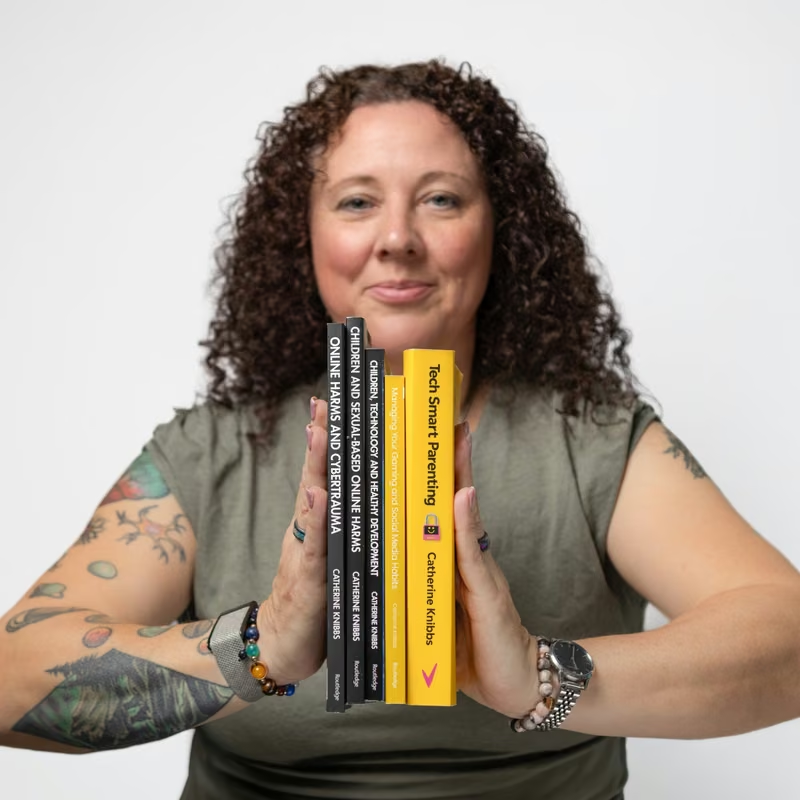
A child and adult psychotherapist and cyberpsychologist, Catherine helps parents and professionals understand how children experience technology, online harm, and porn.


A psychosexual therapist and Europe's leading specialist in porn habits, Silva helps people understand what's driving their habits, without judgment.







Help is available when you're feeling low – you don't have to suffer in silence. If you're in crisis or struggling to cope, find someone to talk to on Find a Helpline.