Porn addiction support groups: Your options compared


Porn addiction support groups range from therapist-led groups and SMART Recovery to 12-step fellowships and online “reboot” forums. Groups led by a trained therapist have the strongest evidence of any option, while peer groups have far less research behind them.
In a trial of 137 men, 7 weeks of group cognitive behavioral therapy (CBT) reduced symptoms more than a waitlist did (Hallberg et al., 2019). At Mojo, we don’t recommend 12-step or abstinence-based groups, because we see too high a risk of harm, and abstinence-focused forums have been linked to worse mental health (Prause & Binnie, 2024).
Porn addiction support groups compared
The biggest differences between groups are who runs them and whether they ask you to stop completely. The table below shows each type of group and where Mojo stands on it.
| Type of group | Who runs it | Does it require total abstinence? | Our view |
|---|---|---|---|
| Break Free From Porn community (Mojo) | Mojo, inside a program designed by Silva Neves | No, you work on your relationship with porn | Our top recommendation (our own program) |
| Therapist-led group therapy (for example, CBT or compassion-focused therapy) | A trained therapist | No, goals are set with the therapist | Recommended |
| SMART Recovery | Trained facilitators | No, it builds practical skills | Can help, as a skills-based option |
| 12-step fellowships (such as SAA, SA, SLAA, PAA, and SPAA) | Members | Most set abstinence-based “sobriety” rules | Not recommended |
| Online “reboot” forums (such as NoFap) | Members | Usually, yes | Not recommended |
“Our view” is Mojo’s position, shaped by Silva Neves, the psychosexual therapist who designed Break Free From Porn.
Do porn addiction support groups work?
It depends on the group. Therapist-led groups have been tested in trials, but peer groups have very little research behind them.
Groups can help you learn about the problem, find support, and find other ways to cope (Mayo Clinic, n.d.). Whether a group helps or harms depends a lot on how it frames the problem and what it asks of you.
Mojo’s anonymous community in Break Free From Porn
Break Free From Porn, a Mojo program, includes anonymous community threads alongside journaling and AI coaching conversations. You can share and read other members’ experiences without your name attached.
The program was designed by Silva Neves, a COSRT-accredited psychosexual and relationship therapist. It follows his 3-phase protocol: Regulation, Reprocessing, and Reconstruction. As Silva Neves puts it: “Most of my patients don’t have a porn problem. They have a life problem. Porn is just the only thing that’s listening.”
A year’s membership costs around the same as one therapy session. You can use it on its own or alongside a therapist.
Group therapy led by a therapist
Group therapy is run by a trained therapist, and it’s the group option with the strongest evidence. You meet with a small group of people working on similar struggles, and the therapist guides the sessions.
The best-tested format is group CBT, which helps you notice and change patterns in your thoughts and actions. In the trial of 137 men, the gains from 7 weeks of group CBT held at 6 months, though fewer men answered that follow-up. The trial only included men, so it’s less clear how the results apply to women (Hallberg et al., 2019).
Other group approaches are being studied too. Compassion-focused therapy helps you meet shame and self-criticism with kindness, and a 2026 exploratory study tested a compassion-focused group for compulsive sexual behaviors (Yates et al., 2026). Groups based on mindfulness also exist.
Experts in sexual medicine say people should be offered evidence-based therapies informed by sexual medicine. They also raise concerns about labeling yourself and about attitudes hostile to sexual pleasure (Briken et al., 2024).
How to find a therapist-led group
Ask a sex therapist or psychosexual therapist whether they run a group, or ask your doctor for a referral. Look for a therapist with a sex-positive approach who is trained in contemporary sexology, and avoid anyone who works from an addiction model or asks you to commit to total abstinence.
These directories list qualified sex therapists:
- US: the American Association of Sexuality Educators, Counselors and Therapists (AASECT).
- UK: the College of Sexual and Relationship Therapists (COSRT) and Silva Neves’s own list of therapists for compulsive sexual behaviour, who don’t use a “sex addiction” model.
- Australia: the Society of Australian Sexologists (SAS).
SMART Recovery
SMART Recovery runs free support groups, led by trained facilitators, that focus on practical tools for changing addictive behaviors. Its groups meet in person and online (SMART Recovery, n.d.-a).
SMART describes its approach as evidence-informed and uses inclusive language with no religious content (SMART Recovery, n.d.-a). It also has a page on sexual behavior, which says its 4-Point Program can fit into a wider plan (SMART Recovery, n.d.-b). It may suit you if you want a skills-based group without 12 steps.
Why we don’t recommend 12-step groups
12-step fellowships for sex and porn, such as Sex Addicts Anonymous (SAA), Sexaholics Anonymous (SA), Sex and Love Addicts Anonymous (SLAA), Porn Addicts Anonymous (PAA), and Sex and Porn Addicts Anonymous (SPAA), do exist. Many follow the 12-step model of Alcoholics Anonymous (Mayo Clinic, n.d.). Despite how popular they are, we don’t recommend them.
Silva Neves sees people in his practice who have been harmed by abstinence-based programs. Most of these groups treat porn and sex as an addiction and ask members to keep strict “sobriety” rules. A slip then becomes a failure to confess, which can deepen shame instead of easing it.
Experts in sexual medicine also strongly oppose treatments that apply an addiction model with abstinence from sex (Briken et al., 2024).
There’s also little good research showing these groups work. The best-known study was a one-time survey of 97 men in one Sexaholics Anonymous community in Israel, and its authors say it can’t show the group caused any change (Efrati & Gola, 2018). Some people, especially people of faith, do find these groups helpful, but we think the risk of harm is too high to suggest them.
Online “reboot” forums and NoFap
Online forums such as NoFap offer support at any hour, but we don’t recommend them either. Most are built around abstinence, and research has linked them to worse mental health.
In a survey of men who had tried NoFap-style “rebooting,” more time on these forums was linked to worse depression, anxiety, and erection problems. Many said their most recent “relapse” left them feeling ashamed, worthless, and sad, and some said it left them wanting to die (Prause & Binnie, 2024). The survey shows a link, so it can’t prove the forums caused these problems.
If you’re having thoughts of suicide, you can call or text 988 in the US, or chat at chat.988lifeline.org. The 988 Suicide & Crisis Lifeline offers free, confidential support 24/7 (988 Suicide & Crisis Lifeline, n.d.).
When faith or values are part of it
For some people, the hardest part is a clash between watching porn and their values. Researchers call this clash moral incongruence. It can add to feeling you have a porn problem, alongside how often you watch, and studies differ on which matters more (Grubbs et al., 2019) (Lewczuk et al., 2020).
“Porn addiction” isn’t a scientifically validated diagnosis, and the World Health Organization (WHO) recognizes compulsive sexual behavior disorder instead. Under its criteria, distress that comes only from moral judgments about your urges or behavior isn’t enough for a diagnosis (World Health Organization, 2024). A sex-positive therapist can help you work through that clash without judging your faith.
How to choose a support group
Start with what you want help with, then pick a group that doesn’t ask you to stop completely. This table matches common goals with the options we recommend.
| If this sounds like you | Consider |
|---|---|
| You want privacy and a step-by-step plan on your own schedule | Break Free From Porn |
| You want a trained professional guiding the group | A therapist-led group, such as group CBT or compassion-focused group therapy |
| You want free, practical tools from a trained facilitator | SMART Recovery |
| Your distress is mostly about your values or faith | A sex-positive therapist, one-to-one or in a group |
Groups don’t suit everyone, so you can also ask a mental health provider to suggest options (Mayo Clinic, n.d.). If you’re not sure how much porn is affecting your life, our porn addiction quiz can help you reflect. If you’re here because of a partner, read our guide for when your husband has a porn addiction.
When a support group isn’t enough
See a doctor or therapist if watching porn is tied to low mood, anxiety, another addiction, or thoughts of harming yourself. A doctor can help work out what’s going on and point you to the right kind of help.
FAQs
Our top recommendation is Break Free From Porn, a program designed by psychosexual therapist Silva Neves, with an anonymous community you can use on your own schedule. If you’d rather meet in a group, a therapist-led group has the strongest evidence. In a trial of 137 men, 7 weeks of group CBT reduced symptoms more than a waitlist did (Hallberg et al., 2019).
Some are. SMART Recovery’s groups are free (SMART Recovery, n.d.-a). Therapist-led groups usually charge a fee, so ask the therapist or clinic.
Yes. SMART Recovery meets online (SMART Recovery, n.d.-a), and Break Free From Porn has an anonymous community in the Mojo app. Many therapists also run groups online.
We don’t recommend 12-step groups, because they’re built around abstinence and we see too high a risk of harm. There’s also little good research showing they work (Efrati & Gola, 2018).
No. Therapist-led groups, SMART Recovery, and Break Free From Porn don’t require total abstinence. You can work on your relationship with porn at a pace that suits you.
Sources
- 988 Suicide & Crisis Lifeline. (n.d.). 988 Lifeline. Retrieved November 4, 2026, from https://988lifeline.org/
- Briken, P., Bőthe, B., Carvalho, J., Coleman, E., Giraldi, A., Kraus, S. W., Lew-Starowicz, M., & Pfaus, J. G. (2024). Assessment and treatment of compulsive sexual behavior disorder: A sexual medicine perspective. Sexual Medicine Reviews, 12(3), 355–370. https://doi.org/10.1093/sxmrev/qeae014
- Efrati, Y., & Gola, M. (2018). Compulsive sexual behavior: A twelve-step therapeutic approach. Journal of Behavioral Addictions, 7(2), 445–453. https://doi.org/10.1556/2006.7.2018.26
- Grubbs, J. B., Perry, S. L., Wilt, J. A., & Reid, R. C. (2019). Pornography problems due to moral incongruence: An integrative model with a systematic review and meta-analysis. Archives of Sexual Behavior, 48(2), 397–415. https://doi.org/10.1007/s10508-018-1248-x
- Hallberg, J., Kaldo, V., Arver, S., Dhejne, C., Jokinen, J., & Görts Öberg, K. (2019). A randomized controlled study of group-administered cognitive behavioral therapy for hypersexual disorder in men. The Journal of Sexual Medicine, 16(5), 733–745. https://doi.org/10.1016/j.jsxm.2019.03.005
- Lewczuk, K., Glica, A., Nowakowska, I., Gola, M., & Grubbs, J. B. (2020). Evaluating pornography problems due to moral incongruence model. The Journal of Sexual Medicine, 17(2), 300–311. https://doi.org/10.1016/j.jsxm.2019.11.259
- Mayo Clinic Staff. (n.d.). Compulsive sexual behavior: Diagnosis and treatment. Mayo Clinic. Retrieved November 4, 2026, from https://www.mayoclinic.org/diseases-conditions/compulsive-sexual-behavior/diagnosis-treatment/drc-20360453
- Prause, N., & Binnie, J. (2024). Iatrogenic effects of Reboot/NoFap on public health: A preregistered survey study. Sexualities, 27(8), 1608–1640. https://doi.org/10.1177/13634607231157070
- SMART Recovery. (n.d.-a). Home. Retrieved November 16, 2026, from https://smartrecovery.org/
- SMART Recovery. (n.d.-b). Sex addiction and recovery. Retrieved November 4, 2026, from https://smartrecovery.org/sex-addiction
- World Health Organization. (2024). 6C72 Compulsive sexual behaviour disorder. In International classification of diseases (11th rev., 2024-01 release). https://icd.who.int/browse/2024-01/mms/en#1630268048
- Yates, M., Hampson, C., Langmans, T., Irons, C., & McCormack, C. (2026). A compassion-focussed group intervention for compulsive sexual behaviours: An exploratory study. Sexual and Relationship Therapy, 1–21. https://doi.org/10.1080/14681994.2026.2614638
Mojo aims to provide useful wellbeing resources to its users; however, you should not solely rely on opinions or advice available on the Website or given by the Community. Always seek advice from a qualified medical doctor or other healthcare professional before acting.
About the experts
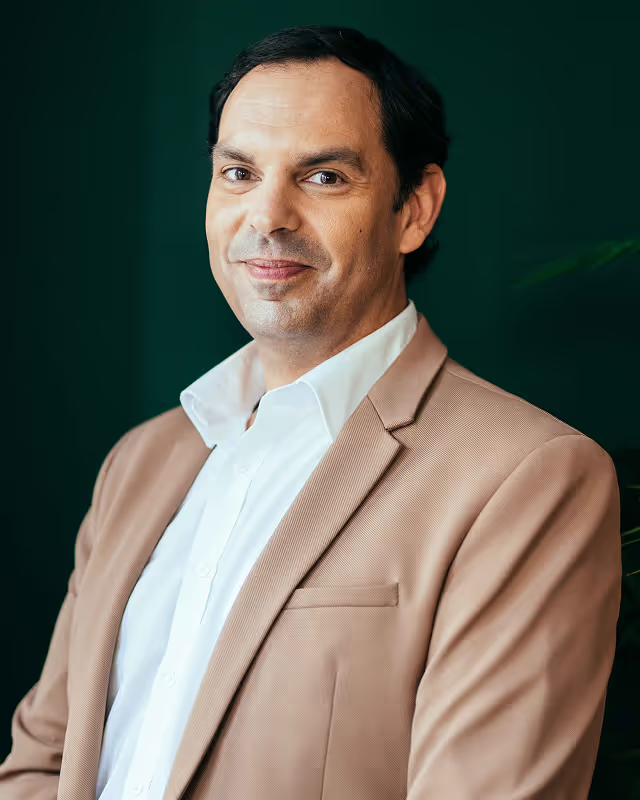
A psychosexual therapist and Europe's leading specialist in porn habits, Silva helps people understand what's driving their habits, without judgment.






Help is available when you're feeling low – you don't have to suffer in silence. If you're in crisis or struggling to cope, find someone to talk to on Find a Helpline.