Why is porn so addictive, and why can’t I stop?
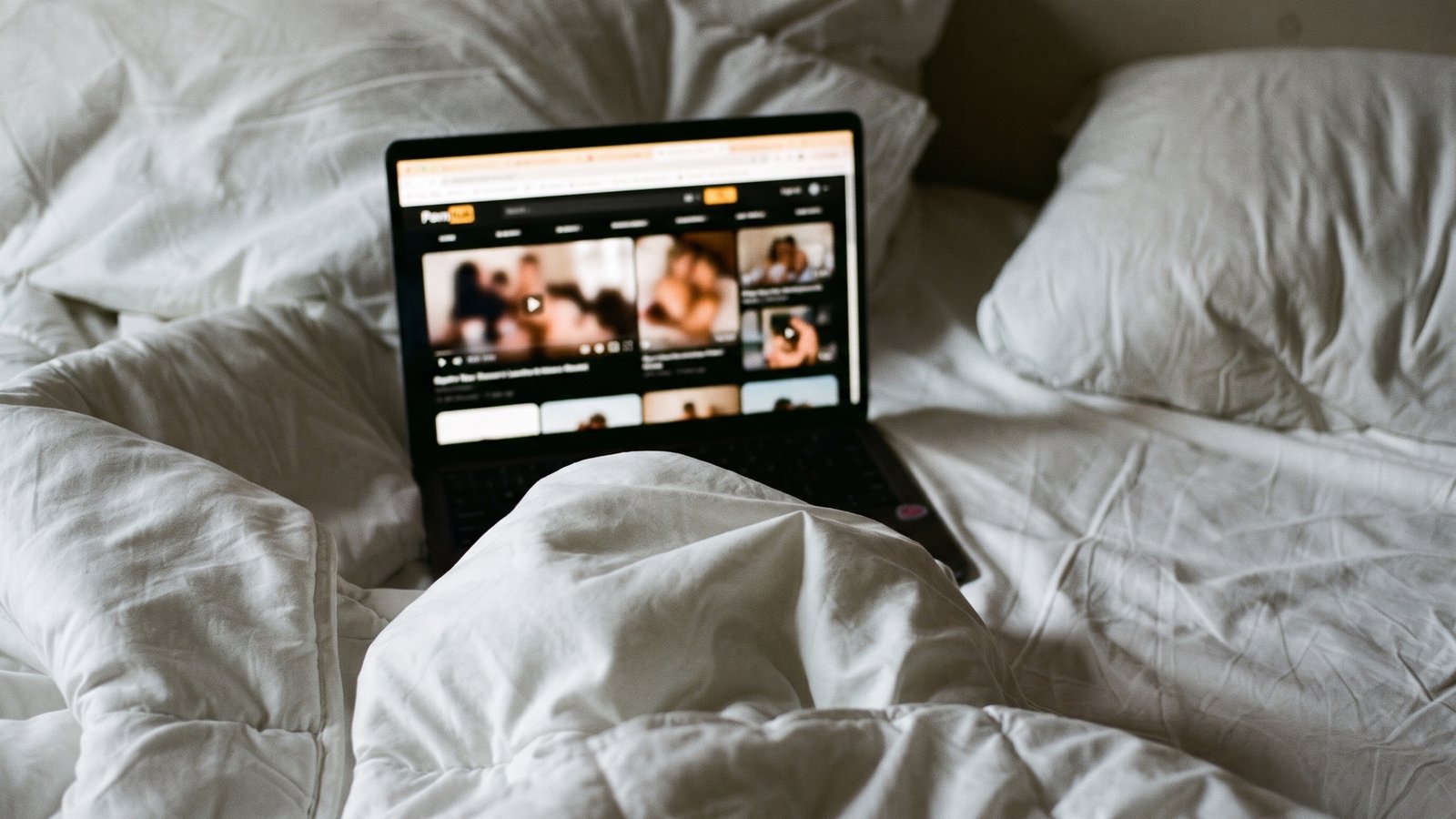

Porn can feel so addictive because it’s free, private, and always close at hand. Your brain can want it strongly even when you don’t enjoy it much, and repetition can make watching automatic. If you can’t stop, habits, low moods, and shame can keep the cycle going, though scientists disagree on whether it’s a true addiction.
In a survey of over 82,000 people across 42 countries, about 3% screened as at risk of problematic porn watching on one questionnaire, while other questionnaires gave estimates as high as about 17% (Bőthe et al., 2024). In a study of 104 online journals by men on a forum for quitting porn, most described stopping as very hard because of habits and cravings, though men who choose to join a forum like this may not speak for everyone (Fernandez et al., 2021).
Is porn actually addictive?
“Porn addiction” isn’t a separate official diagnosis, and scientists still disagree on whether it’s a true addiction. Even so, porn watching that is persistent and hard to control can meet the criteria for compulsive sexual behavior disorder (CSBD) in some people. The World Health Organization (WHO) recognizes CSBD as a medical condition.
The WHO groups CSBD with impulse control disorders instead of addictions. Experts who helped shape the diagnosis said there isn’t yet clear evidence that it works the same way as substance use, gambling, or gaming disorders (Kraus et al., 2018).
The diagnosis has a high bar, and at its center is a lasting failure to control strong, repeated sexual urges or behavior. The pattern has to go on for a long time, such as 6 months or more, and cause marked distress or real problems in daily life (World Health Organization, 2024). Distress that comes only from moral judgments about your own sexual urges or behavior isn’t enough on its own.
The feeling that you can’t stop is still real, whatever label fits it. If you want to reflect on your own pattern, try our porn addiction quiz. It’s a self-reflection tool, and only a qualified professional can make a diagnosis.
What does dopamine actually do?
Dopamine plays a major role in motivation, or wanting something, and in learning which things are rewarding. Pleasure itself comes from several brain systems working together, including small “hot spots” that create the feeling of enjoyment. Research suggests dopamine is more closely tied to wanting than to that feeling of pleasure (Berridge & Kringelbach, 2015).
That’s why the popular idea of a “dopamine hit” from porn is misleading. It treats dopamine as a pleasure chemical, which is exactly the part this research questions.
The split between wanting and liking helps explain a common experience. You can want porn strongly, even on days when you don’t enjoy it much.
What brain studies on porn show
A few small brain-scan studies found differences in how some men who struggle with porn respond to sexual cues. Researchers have read these as possibly linked to motivation or craving, but the scans don’t measure craving or dopamine directly, and none can show that porn caused the differences. The table below sums up the main studies, who took part, and what each one can’t tell us.
| Study | Who took part | What they found | What it can’t tell us |
|---|---|---|---|
| Voon et al., 2014 | 19 men with compulsive sexual behavior and 19 men without | More desire for sexually explicit videos, but the same liking. More activity in brain areas linked to reward and motivation. | Small sample of men only. Can’t show cause |
| Gola et al., 2017 | 28 men seeking help for problematic porn watching and 24 men without | Stronger brain reactions to cues that a sexual image was coming, but not to the images themselves | Small sample of men only. Shows links only. |
| Kühn & Gallinat, 2014 | 64 healthy men | More weekly hours of porn went along with less gray matter in one reward area, the right caudate | Can’t tell which came first |
| Prause et al., 2015 | 122 people | People who struggled to control their porn viewing and had higher sexual desire showed smaller brain responses to sexual images | One measure in one study. Doesn’t settle the debate. |
Wanting more without liking more
Both small studies suggest a gap between wanting porn and enjoying it, but they measured it in different ways. The first asked men to rate how much they wanted and liked explicit videos. Men with compulsive sexual behavior wanted the videos more but didn’t like them more, and the authors said this split looks similar to what’s seen in drug addiction (Voon et al., 2014).
The second study measured brain reactions instead, and stronger reactions to a cue that a sexual image was coming went along with watching more porn and masturbating more often each week (Gola et al., 2017). The authors read this as wanting and liking coming apart. Neither study shows that this pattern happens in everyone who struggles with porn.
The “brain on porn” study
The study behind many “porn shrinks your brain” headlines found a link between more hours of porn and less gray matter in one reward area. Its authors offered 2 possible explanations. Watching porn could change the brain over time, or men with this brain difference might find porn more rewarding to begin with (Kühn & Gallinat, 2014).
A single snapshot study like this can’t tell which came first, so the “shrinking” headlines go further than the evidence does.
The studies that don’t fit
Some research points the other way. The authors of the brain-wave study in the table said their results were the opposite of what an addiction model would predict (Prause et al., 2015).
Why porn is so easy to slip into
Online porn is easy to reach, costs nothing, and can be watched in private, so it’s easy to turn to without really deciding to. One early psychology paper called these 3 draws the “Triple A Engine”: access, affordability, and anonymity (Cooper, 1998).
Those same 3 things make porn easy to repeat in the same places and moods, like in bed with your phone late at night.
Why can’t I stop watching porn?
Habits can be one reason. Once watching porn becomes a habit, cues around you can set it off even after you decide to stop, and cravings and hard feelings can add to the pull.
Research on habits in general describes them as actions that cues, like a place or a time of day, set off automatically. Once a habit forms, it can keep running even when your intentions change, and it doesn’t respond much to how rewarding the action still is (Wood & Rünger, 2016). That research covers all kinds of habits, so habit is likely one part of the picture for porn, alongside emotions, cravings, and trouble controlling urges.
Put that next to the split between wanting and liking, and “I don’t even enjoy it, so why do I keep doing it?” starts to make sense.
Porn can also become a way to cope with hard feelings. A 2026 review of 111 study samples found problematic porn watching is linked with cravings, trouble managing emotions, depression, loneliness, and sexual shame (Sheikhi et al., 2026). These are links, so they can’t show which one causes the other.
Silva Neves is the psychosexual and relationship therapist who designed Mojo’s Break Free From Porn program.
If you tend to watch porn after anxious or low days, our guides to anxiety and porn and porn and depression look at those links in more detail.
Can shame keep the cycle going?
Guilt and shame about watching porn can add to your distress and make you feel worse about yourself. Whether they also make it harder to stop is less certain.
Researchers use the term “moral incongruence” for a clash between what you do and what you believe is right. Both how often you watch and a clash with your values can add to feeling that you have a porn problem, and studies differ on which matters more. One review found the clash with your values mattered more (Grubbs et al., 2019), while a survey of over 1,000 adults in Poland found how often people watched was the stronger predictor (Lewczuk et al., 2020).
Habit-change research describes a related trap called the “abstinence violation effect.” When people blame a slip on personal failure, they tend to feel guilt, and that reaction can make a full return to the old pattern more likely (Larimer et al., 1999). This model was first built to help people change their drinking and hasn’t been tested on porn.
What helps when you want to watch less
Changing your surroundings and building other ways to cope tends to work better than relying on willpower in the moment. If porn is causing you real distress or getting in the way of daily life, a doctor or a specialist sex therapist can help you work out what’s going on and what to try.
Talking therapies have the most research behind them, especially cognitive behavioral therapy (CBT) and acceptance and commitment therapy (ACT). A 2025 review of 20 studies found people who had therapy cut back on problematic porn watching more than people who didn’t, though many of the studies had a high risk of bias (López-Pinar et al., 2025).
Alternatively, Break Free From Porn is a program designed by Silva Neves, a COSRT-accredited psychosexual and relationship therapist. A year’s membership costs around the same as a single sex therapy session, and you can do it from the privacy of your home.
The program starts from the idea that porn is often a signal of something else, like low mood, loneliness, a shame spiral, or a life without enough in it. It offers shame-free strategies informed by psychological research, and it focuses on understanding what’s behind the urge and building other ways to cope. It also includes a built-in blocker that works as a pause before you watch, to help with urges in the early stages.
People with strong self-control tend to build habits that keep temptation out of the way. Changing the cues around you can weaken an old habit (Wood & Rünger, 2016). Many men keeping journals on an online forum for quitting porn said it became doable once they had the right mix of inner tools and outside support (Fernandez et al., 2021).
Here are a few practical ideas from Mojo, based on that habit research:
- Move the cue. Charge your phone outside the bedroom.
- Name the feeling. Before you open porn, notice whether you’re bored, stressed, lonely, or low.
- Plan another way to cope. Pick one specific thing, like a walk, a call, or a shower, for the times of day you find hardest.
- Talk to someone. A friend, a support group, or a therapist can help you spot patterns. Our guide to porn addiction therapy explains what to expect.
If you’ve decided to stop, our guide on how to quit porn explains why cold turkey can backfire and what to try instead.
FAQs
Very likely, as with other rewards, but brain studies on porn haven’t measured dopamine directly. The scans measure blood flow, and they show more activity in reward areas when some men see sexual cues (Voon et al., 2014). Dopamine is more involved in wanting and learning about rewards than in pleasure itself, so a “dopamine hit” is the wrong way to picture it (Berridge & Kringelbach, 2015).
One study of 64 men linked more weekly hours of porn with less gray matter in one reward area. The authors couldn’t tell whether porn caused the difference or the difference came first (Kühn & Gallinat, 2014).
There’s no good evidence for that comparison. The WHO doesn’t class compulsive sexual behavior as an addiction at all, because it’s still unclear whether it works like substance use (Kraus et al., 2018).
Wanting and enjoying run on different brain systems, so you can want something you don’t enjoy much. In one small study, men with compulsive sexual behavior wanted explicit videos more than other men but didn’t like them any more (Voon et al., 2014).
“Porn addiction” isn’t a separate official diagnosis, but persistent porn watching that’s hard to control can meet the criteria for compulsive sexual behavior disorder in some people. The WHO recognizes this condition, which needs a long-lasting failure to control sexual urges or behavior that causes marked distress or real problems in daily life (World Health Organization, 2024).
Our porn addiction quiz is a self-reflection tool that can help you think about your own pattern. It can’t diagnose you, so if your porn watching feels out of control, causes you real distress, or gets in the way of daily life, talk to a doctor or a specialist sex therapist.
Sources
- Berridge, K. C., & Kringelbach, M. L. (2015). Pleasure systems in the brain. Neuron, 86(3), 646–664. https://doi.org/10.1016/j.neuron.2015.02.018
- Bőthe, B., Nagy, L., Koós, M., Demetrovics, Z., Potenza, M. N., International Sex Survey Consortium, & Kraus, S. W. (2024). Problematic pornography use across countries, genders, and sexual orientations: Insights from the International Sex Survey and comparison of different assessment tools. Addiction, 119(5), 928–950. https://doi.org/10.1111/add.16431
- Cooper, A. (1998). Sexuality and the Internet: Surfing into the new millennium. CyberPsychology & Behavior, 1(2), 187–193. https://doi.org/10.1089/cpb.1998.1.187
- Fernandez, D. P., Kuss, D. J., & Griffiths, M. D. (2021). The pornography “rebooting” experience: A qualitative analysis of abstinence journals on an online pornography abstinence forum. Archives of Sexual Behavior, 50(2), 711–728. https://doi.org/10.1007/s10508-020-01858-w
- Gola, M., Wordecha, M., Sescousse, G., Lew-Starowicz, M., Kossowski, B., Wypych, M., Makeig, S., Potenza, M. N., & Marchewka, A. (2017). Can pornography be addictive? An fMRI study of men seeking treatment for problematic pornography use. Neuropsychopharmacology, 42(10), 2021–2031. https://doi.org/10.1038/npp.2017.78
- Grubbs, J. B., Perry, S. L., Wilt, J. A., & Reid, R. C. (2019). Pornography problems due to moral incongruence: An integrative model with a systematic review and meta-analysis. Archives of Sexual Behavior, 48(2), 397–415. https://doi.org/10.1007/s10508-018-1248-x
- Kraus, S. W., Krueger, R. B., Briken, P., First, M. B., Stein, D. J., Kaplan, M. S., Voon, V., Abdo, C. H. N., Grant, J. E., Atalla, E., & Reed, G. M. (2018). Compulsive sexual behaviour disorder in the ICD-11. World Psychiatry, 17(1), 109–110. https://doi.org/10.1002/wps.20499
- Kühn, S., & Gallinat, J. (2014). Brain structure and functional connectivity associated with pornography consumption: The brain on porn. JAMA Psychiatry, 71(7), 827–834. https://doi.org/10.1001/jamapsychiatry.2014.93
- Larimer, M. E., Palmer, R. S., & Marlatt, G. A. (1999). Relapse prevention: An overview of Marlatt’s cognitive-behavioral model. Alcohol Research & Health, 23(2), 151–160. https://pmc.ncbi.nlm.nih.gov/articles/PMC6760427/
- Lewczuk, K., Glica, A., Nowakowska, I., Gola, M., & Grubbs, J. B. (2020). Evaluating pornography problems due to moral incongruence model. The Journal of Sexual Medicine, 17(2), 300–311. https://doi.org/10.1016/j.jsxm.2019.11.259
- López-Pinar, C., Esparza-Reig, J., & Bőthe, B. (2025). Psychotherapy for problematic pornography use: A comprehensive meta-analysis. Journal of Behavioral Addictions, 14(2), 630–643. https://doi.org/10.1556/2006.2025.00018
- Prause, N., Steele, V. R., Staley, C., Sabatinelli, D., & Hajcak, G. (2015). Modulation of late positive potentials by sexual images in problem users and controls inconsistent with “porn addiction.” Biological Psychology, 109, 192–199. https://doi.org/10.1016/j.biopsycho.2015.06.005
- Sheikhi, S., Mohammadkhani, S., & Akbari, M. (2026). Psychological correlates of problematic pornography use: A systematic review and meta-analysis of measurement and conceptualization differences. Addictive Behaviors Reports, 24, 100741. https://doi.org/10.1016/j.abrep.2026.100741
- SimplePractice. (2025, March 11). Average therapy session rate by state. Retrieved November 4, 2026, from https://www.simplepractice.com/blog/average-therapy-session-rate-by-state
- Voon, V., Mole, T. B., Banca, P., Porter, L., Morris, L., Mitchell, S., Lapa, T. R., Karr, J., Harrison, N. A., Potenza, M. N., & Irvine, M. (2014). Neural correlates of sexual cue reactivity in individuals with and without compulsive sexual behaviours. PLOS ONE, 9(7), e102419. https://doi.org/10.1371/journal.pone.0102419
- Wood, W., & Rünger, D. (2016). Psychology of habit. Annual Review of Psychology, 67, 289–314. https://doi.org/10.1146/annurev-psych-122414-033417
- World Health Organization. (2024). 6C72 Compulsive sexual behaviour disorder. In International classification of diseases (11th rev., 2024-01 release). https://icd.who.int/browse/2024-01/mms/en#1630268048
Mojo aims to provide useful wellbeing resources to its users; however, you should not solely rely on opinions or advice available on the Website or given by the Community. Always seek advice from a qualified medical doctor or other healthcare professional before acting.
About the experts

A neurobiologist and science communicator, Paula turns research on the brain, behaviour and health into clear, evidence-based education about mental, physical, and sexual well-being.






Help is available when you're feeling low – you don't have to suffer in silence. If you're in crisis or struggling to cope, find someone to talk to on Find a Helpline.