Anxiety and porn: what you need to know
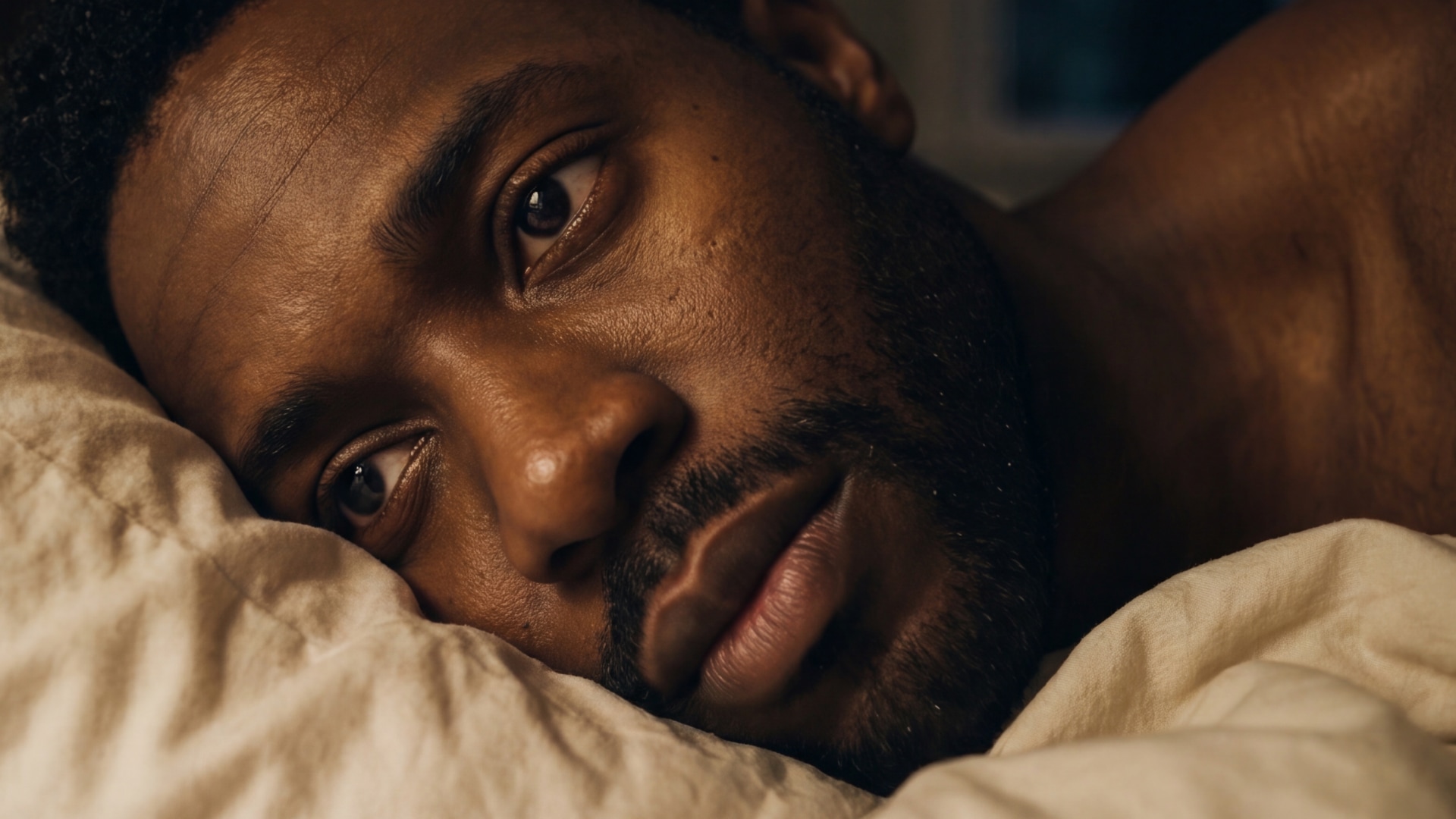

No study shows that watching porn causes anxiety on its own. Anxiety and stress usually come first, and watching porn becomes a way to cope. That coping habit can create anxiety of its own, and that happens when it clashes with your values (Grubbs et al., 2019). Among men starting Mojo’s Break Free From Porn program, 1 in 4 name stress as a reason they watch porn. So going cold turkey can feel worse at first, because you have lost a coping tool.
With help from psychosexual and relationship therapist Silva Neves, here’s what the evidence says, and what to do if you experience porn-related distress.
Does porn cause anxiety?
Porn-related distress is better explained by something researchers call moral incongruence. That’s a mismatch between what you do and what you believe. This mismatch, not how often someone watches porn, is the strongest known predictor of porn-related distress (Grubbs et al., 2019).
Other research points the same way. One study found that pre-existing anxiety, along with depression and low self-esteem, predicted a later rise in porn-related distress. It’s not the same the other way around (Bibi et al., 2022). A 2023 review found that the guilt and conflict people feel after watching porn often trace back to religious or cultural beliefs, not porn itself (Privara & Bob, 2023).
This matches what 50 years of academic research on pornography has found overall: no proven causation between viewing porn and sexual dysfunction, relationship problems, or mental health issues (McKee et al., 2022). The same pattern shows up in how porn and erection problems can be linked.
Psychosexual therapist Silva Neves has a simple way of putting this: porn is usually the signal pointing at something else going on. It can point to porn being used as a way to handle difficult emotions. If that’s the case, taking porn away makes the underlying distress worse. Sometimes it’s leaning too hard on willpower to stop watching porn, and the guilt about struggling feeds the cycle. And sometimes there just isn’t enough connection, stimulation, or things to look forward to, so porn fills a gap that would otherwise be empty. In every case, the problem traces back to what’s happening around porn, not porn being harmful on its own.
Work out which of these patterns fits your situation, and you can see what your anxiety is really about.
Porn as a coping tool for stress and anxiety
Motivations for viewing porn, including to cope with hard emotions, are linked to higher depression and anxiety symptoms (Li et al., 2025). A cross-sectional survey of US university students found that compulsive porn watching was linked to higher self-reported anxiety, depression, and stress. About 1 in 5 students in that sample reported severe or extremely severe anxiety (Camilleri et al., 2021). This sample came from a single, faith-affiliated population, which may skew toward more guilt about watching porn, so treat the figure as a snapshot of that group, not a national rate.
When people start Mojo’s Break Free From Porn program, we ask them why they turn to porn.
| Reason | Share of Mojo users at the start of the program |
|---|---|
| Comfort | 27% |
| Stress | 25% |
| Distract or suppress feelings | 25% |
| Boredom | 22% |
(Mojo onboarding poll data, Break Free From Porn, n=1,020, 2026. This reflects people who had already decided to explore their relationship with porn, not a general population sample.)
Another poll found that 23% of people starting the program picked “mental health or emotional struggles” as a driver of their distress about porn (Mojo onboarding poll data, Break Free From Porn, n=836, 2026).
One module in the program focuses on building a wider set of coping strategies, not just talking about porn itself. The idea isn’t to remove porn and leave a gap. It’s to add other ways of handling stress, so porn isn’t the only tool in the box. Stress and anxiety are also a shared root cause behind psychological erectile dysfunction, which is worth reading if stress is showing up as erection difficulties too.
Is watching porn to cope with anxiety a problem?
Not automatically. What matters is whether it’s someone’s only coping tool, and whether it’s adding to their distress.
If it’s the only tool you reach for, and stepping away from it, even briefly, feels impossible, that’s worth paying attention to.
Why anxiety can spike after quitting porn
Quitting usually brings anxiety for two reasons: losing a familiar coping tool, and the shame that piles on top of any “relapse.” That combination explains most of what people describe as porn withdrawal.
There’s no verified clinical evidence for a distinct “porn withdrawal syndrome.” Terms people use for it online are based on self-reported experiences, not a diagnosed condition. That doesn’t mean the anxiety is fake. When quitting cold turkey doesn’t work, people often call it “withdrawal,” when really it’s existing anxiety that doesn’t go away just because the porn does.
If stress, boredom, or low mood was the reason you watched porn in the first place, that reason is still there once the porn is gone. Often there’s more anxiety on top, because now there’s a new thing to feel bad about: not managing to “stay clean.”
Research on abstinence backs this up. One analysis of abstinence journals found that people frequently describe giving up porn as difficult, sometimes feeling impossible at first, before it becomes more achievable with the right support (Fernandez et al., 2021).
Online quitting communities, like the cold-turkey forums on Reddit, can make this worse. They often treat any slip as a failure, which piles on pressure instead of support. Support at home is often missing too, because most couples have never really talked about porn or agreed what role it plays for them (Willoughby et al., 2024). So the person trying to quit can end up facing the anxiety alone.
This is exactly the gap Mojo’s Break Free From Porn program is built to address: understanding what your relationship with porn is and developing new tools to handle distress.
Situational anxiety vs. a diagnosable anxiety disorder
Situational anxiety, like guilt, stress, or worry tied to the porn-shame cycle, is different from a diagnosable condition like generalized anxiety disorder or panic disorder. Only a licensed clinician can tell you which one you’re dealing with.
| What it looks like | Situational anxiety (porn-related) | Diagnosable anxiety disorder |
|---|---|---|
| Trigger pattern | Tied to watching porn, guilt, or the shame-secrecy cycle | Can show up with no clear trigger, or spread across many areas of life |
| Duration | Comes and goes, often eases once guilt or secrecy lifts | Persistent, often lasting weeks or months |
| What helps | Understanding what’s driving the distress, reducing shame, building coping tools | Assessment and treatment from a licensed mental health professional |
| When to see someone | If it’s not easing, or you’re not sure what’s driving it | If anxiety is constant, out of proportion, or interferes with daily life outside of watching porn |
Anxiety and erection difficulties often share the same root causes, which is part of the overlap between anxiety and erectile dysfunction. Both can show up as part of the same stress response, whether or not porn is anywhere in the picture.
Here’s a simple way to tell them apart. Does the worry ease once the guilt or secrecy around porn is dealt with? If it does, it was likely situational. If the anxiety sticks around even after that, it may be a diagnosable anxiety disorder, because it isn’t really about porn.
If your anxiety feels out of proportion, doesn’t ease up, or shows up even when porn isn’t part of the picture, that’s a sign to talk to a licensed therapist or doctor.
A program like Break Free From Porn can help you understand patterns. It can’t diagnose or treat a clinical anxiety disorder, and it isn’t a replacement for one.
What helps when porn and anxiety feel tangled together
Silva Neves has spent a decade training sex therapists and is one of Europe’s leading specialists in compulsive sexual behaviors and porn-related distress.
His approach is grounded in 50 years of academic research showing no proven causation between porn and sexual dysfunction, relationship problems, or mental health issues (McKee et al., 2022), and it aligns with the World Health Organization’s ICD-11 framework, which centers on distress and impact on someone’s life, not on how often they watch porn.
Mojo’s Break Free From Porn program, built with Silva Neves, helps people understand what’s driving their distress and build a wider set of coping tools. It doesn’t diagnose, treat, or cure an anxiety disorder, and it isn’t therapy.
The program isn’t built around quitting porn as the goal. It’s built around understanding what’s underneath the distress and building from there. That’s a different starting point than most “quit porn” programs, which tend to treat porn itself as the problem to eliminate. The goal is a relationship with porn, and with yourself, that doesn’t create unhelpful self-judgment.
If anxiety is getting in the way of daily life, a licensed therapist or doctor can help you find the right support.
Sources
- Grubbs, J. B., Perry, S. L., Wilt, J. A., & Reid, R. C. (2019). Pornography problems due to moral incongruence: An integrative model with a systematic review and meta-analysis. Archives of Sexual Behavior, 48(2), 397–415. https://pubmed.ncbi.nlm.nih.gov/30076491/
- Bibi, K., Fatima, A., Amin, R., & Rowland, D. L. (2022). Understanding serial mediators of problematic pornography use in Pakistani men and women. International Journal of Environmental Research and Public Health, 19(21), 14336. https://pubmed.ncbi.nlm.nih.gov/36361229/
- Privara, M., & Bob, P. (2023). Pornography consumption and cognitive-affective distress. Journal of Nervous and Mental Disease, 211(8), 641–646. https://pubmed.ncbi.nlm.nih.gov/37505898/
- McKee, A., Litsou, K., Byron, P., & Ingham, R. (2022). What do we know about the effects of pornography after fifty years of academic research? Routledge.
- Li, L., Feng, R., Yang, L., Lang, R., Ince, C., Liu, C., Ren, L., Feng, Z., & Li, K. (2025). Unraveling the impact of cyberporn motivations on mental health: Insights from Chinese college students. BMC Psychology, 13(1), 562. https://pubmed.ncbi.nlm.nih.gov/40420131/
- Camilleri, C., Perry, J. T., & Sammut, S. (2021). Compulsive internet pornography use and mental health: A cross-sectional study in a sample of university students in the United States. Frontiers in Psychology, 11, 613244. https://pubmed.ncbi.nlm.nih.gov/33510691/
- Fernandez et al. (2021), as cited in Mojo’s Transform Your Porn Habits internal stats reference.
- Willoughby, B. J., et al. (2024), as cited in Mojo’s Transform Your Porn Habits internal stats reference.
- World Health Organization. (n.d.). Compulsive sexual behaviour disorder (6C72). In International Classification of Diseases (11th ed., ICD-11).
Mojo aims to provide useful wellbeing resources to its users; however, you should not solely rely on opinions or advice available on the Website or given by the Community. Always seek advice from a qualified medical doctor or other healthcare professional before acting.
About the experts

A psychosexual therapist and Europe's leading specialist in porn habits, Silva helps people understand what's driving their habits, without judgment.






Help is available when you're feeling low – you don't have to suffer in silence. If you're in crisis or struggling to cope, find someone to talk to on Find a Helpline.