Best porn addiction apps: An honest comparison
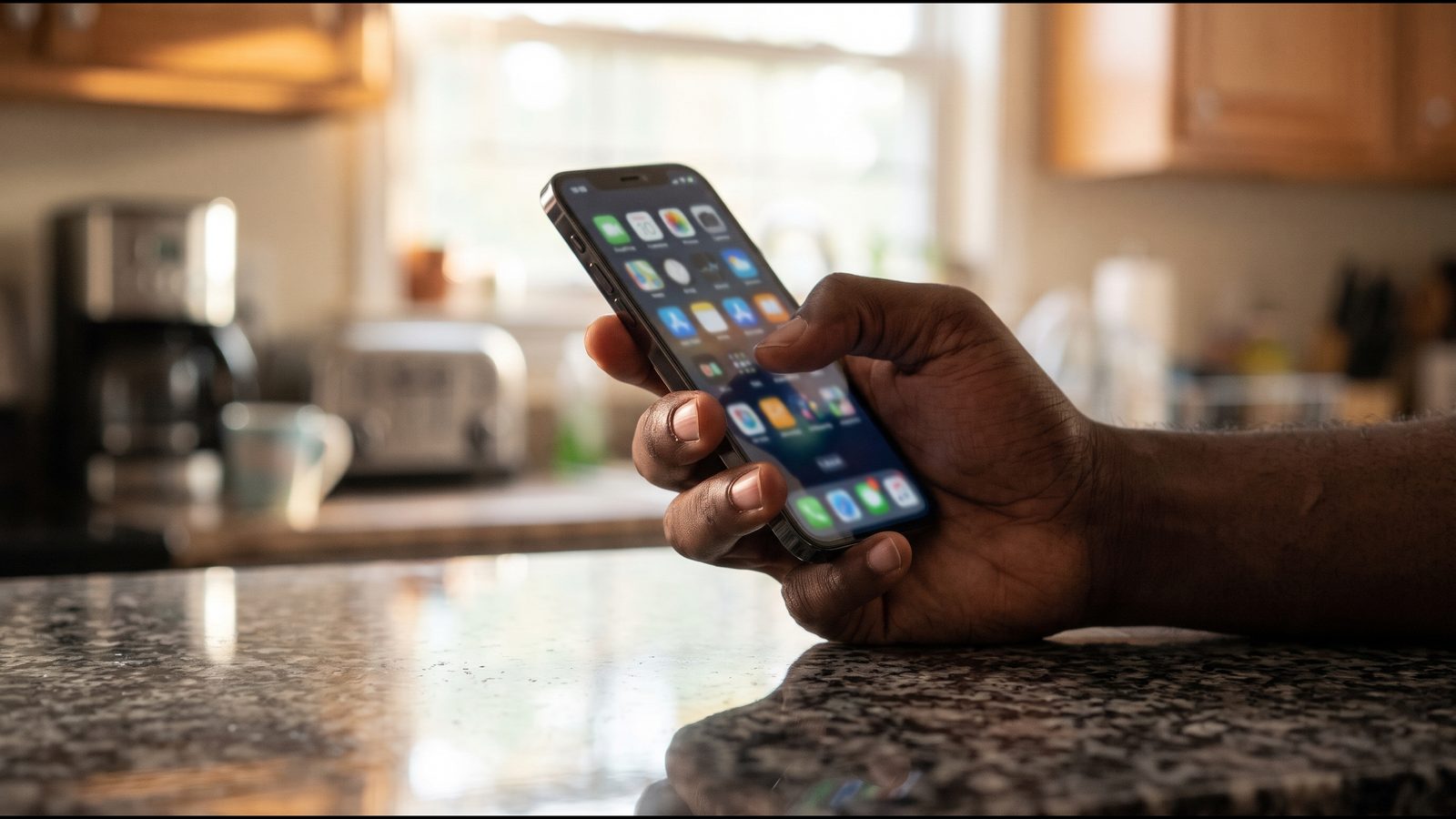

The best porn addiction app depends on why you watch, and the 4 main types are structured programs, streak trackers, blockers and accountability apps, and community apps. Structured online programs have some early research support, but evidence on app features is still limited, so no type has been shown to work best.
In a 2022 review of 170 English-language apps listed under “pornography addiction” on Google Play and the Apple App Store, the most common feature was a streak counter, found in 72 apps (42.4%) (Henry et al., 2022). Blocking apps had by far the most Android installs of any feature type in that review (Henry et al., 2022).
What types of porn addiction apps are there?
Porn addiction apps fall into 4 main types, and many apps mix 2 or more. Here’s what each type does:
- Structured programs teach skills through lessons in a set order.
- Streak and habit trackers count the days since you last watched porn.
- Blockers and accountability apps make porn harder to reach, or share your activity with someone you trust.
- Community apps connect you with other people working on the same thing.
Porn addiction apps compared
There isn’t enough independent research to say which of these apps definitively works best, but the table below compares 9 options on the same points.
| App | Type | Goal | Approach | Who designed it | Key features |
|---|---|---|---|---|---|
| Break Free From Porn (Mojo) | Structured program and blocker | Change your relationship with porn: quit, cut back, or change what you watch | Understand what drives the urge and build a fuller life | Silva Neves, a COSRT-accredited psychosexual and relationship therapist, who also leads the program videos | Videos, AI coaching conversations, practical exercises, anonymous community threads, journaling, a pause-before-you-watch blocker |
| Fortify | Structured program | Quit | Plan built from a starting assessment | Founded by Clay Olsen of Fight the New Drug. Its website names a clinical advisory board, including a psychiatrist and therapists. | Videos and challenges, goal tracking, AI coaching and forums in Premium |
| Relay | Structured program and peer groups | Quit | Small matched groups plus lessons | Its website says “leading therapists” designed it, but names none | Daily check-ins, urge and trigger logging, group chat, optional live Zoom meetings |
| Brainbuddy | Structured program and tracker | Quit | 100-day education program | No designers or clinicians named on its listing or website | Progress tracking, daily check-up, group challenges, content blocker |
| QUITTR | Structured program and tracker | Quit | 90-day program with daily exercises | Founded in 2024 by Alex Slater and other young co-founders. No clinicians named. | Progress tracker, community, built-in blockers |
| I Am Sober | Streak tracker | Stay sober from the habits you choose | Day counter for habits you choose | General habit tracker. No clinicians named on its listing. | Day tracker, daily pledge, community feed |
| Covenant Eyes (Victory) | Accountability and blocker | Avoid porn by blocking it and sharing your activity with an ally | Shares your screen activity with an “ally” | Founded by Ron DeHaas as a Christian accountability tool. No clinicians named. | Site blocking, blurred and encrypted screenshots, Christian community |
| Ever Accountable | Accountability | Be open with a partner about what you watch online (no goal stated) | Sends activity reports to a partner | Founded by Tyler Patterson. Its website lists counselors, including a recovery curriculum creator with a PhD. | Uninstall alerts, optional filter |
| NoFap | Community | Quit | Peer forum focused on quitting. Not recommended by Mojo. | Founded in 2011 by Alexander Rhodes, a web developer. No clinical team named. | Forum with over a million members, support groups, guides |
Goals, features, and platforms come from each app’s own App Store listing, Google Play listing, or website, checked on November 4, 2026. All the apps run on iPhone and Android except NoFap (website), and Covenant Eyes and Ever Accountable also run on computers. Who designed each app comes from its own website or listing, plus press coverage for QUITTR (Dazed, 2026) and NoFap (Wikipedia, citing Maclean’s, 2014).
Structured programs
Structured programs walk you through lessons in a set order, and most of them are paid. They suit you best if you want to understand why you watch porn and learn new ways to cope.
Break Free From Porn (Mojo)
Break Free From Porn is a Mojo program designed by Silva Neves, a psychosexual and relationship therapist. It works in 3 phases, called Regulation, Reprocessing, and Reconstruction. Its aim is to help you understand what drives the urge and build a better life, with no streak to keep.
The program includes expert-led videos, AI coaching conversations, exercises, and anonymous community threads and journaling. As Silva puts it: “Most of my patients don’t have a porn problem. They have a life problem. Porn is just the only thing that’s listening.”
Break Free From Porn also has a built-in blocker that works as a pause before you watch. It’s there to help with urges early in the program, while you work on what drives them.
On Android phones, trying to open a porn site brings up a message from Mojo, and you can keep it blocked, allow it, or pause the block for 5 to 15 minutes. On iPhone, porn sites and apps stay blocked until you turn the blocker off in the Mojo app, which starts with a short check-in on how you’re feeling.
Fortify
Fortify builds a plan of videos and challenges from an assessment you take at the start. It adds tracking, goal setting, and lifestyle coaching, and its Premium plan includes AI coaching and community forums. Fortify describes its approach as based on “research-based principles of therapeutic lifestyle change.”
Relay
Relay puts you in a small, private group of people with the same goal, and the groups are split by gender. You check in daily, log urges and triggers, and work through lessons that Relay says were created by licensed therapists. Relay also offers a version for churches, and it says it isn’t a replacement for therapy.
Brainbuddy and QUITTR
Brainbuddy and QUITTR are both built around a set number of days, 100 for Brainbuddy and 90 for QUITTR. Each mixes lessons and daily exercises with progress tracking, a community, and a built-in blocker. Both describe themselves as science-based, but neither store listing names a study.
Streak and habit trackers
A streak tracker counts the days since you last watched porn, which makes it the simplest type of app. Many of the structured programs above include a counter too.
I Am Sober is a general tracker that lets you choose which habits to track. It also logs a daily pledge and has a community feed. Its App Store listing doesn’t mention porn, so you set that habit up yourself.
A counter gives you a clear number to aim for. The downside is that one slip resets it to zero, which can make a single hard night feel like you’ve lost everything.
Blockers and accountability apps
Blockers make porn harder to reach, and accountability apps share your activity with someone you trust. Some apps do both, and some structured programs, including Brainbuddy, QUITTR, and Break Free From Porn, have a blocker built in.
Covenant Eyes blocks sites and sends your screen activity to an “ally” you choose, with screenshots blurred and encrypted. It’s openly Christian, which suits some people more than others.
Ever Accountable sends activity reports to a partner and alerts them if you try to uninstall the app. Its filter is optional and switched off unless you turn it on.
In a study of 104 online “rebooting” journals, men said they could usually get around blocking apps. They still found blockers useful as one extra barrier in a weak moment (Fernandez et al., 2021).
Community apps and forums
Community apps and forums connect you with other people trying to change the same thing. NoFap runs a peer forum with over a million members, plus support groups and guides that encourage quitting. We don’t recommend NoFap or other abstinence-based forums and groups. In one survey of men, more time on NoFap-style forums was linked to worse depression, anxiety, and erection problems (Prause & Binnie, 2024). Another study compared r/NoFap with 2 other Reddit recovery forums, r/pornfree and r/stopdrinking. Of 421 violent posts found across the 3 forums between 2011 and 2022, 94.3% were on r/NoFap (Prause & Ley, 2024). Relay’s small groups and the anonymous threads in Break Free From Porn are community features too.
In the same rebooting-journal study, social support and accountability mattered most to the men trying to stop (Fernandez et al., 2021). Each forum has its own tone and rules, so read a few threads before you join. Our guide to porn addiction support groups compares in-person and online options.
How to use these apps
One practical way to use these apps is to start with a structured program, then add other tools if you need them. A structured program works on what drives the urge, which takes time, while a blocker or tracker can help you feel more in control in the meantime.
This is Mojo’s suggestion, and the research behind it is early. The only digital self-help tool tested in a trial was a 6-week web program, which showed promising results but had a very high dropout rate (Bőthe et al., 2021). The authors of the 2022 app review suggested combining features as a possible approach, but they didn’t test whether it improves results (Henry et al., 2022).
| App type | What it does for you | When to use it |
|---|---|---|
| Structured program | Works on what drives the urge, like stress, low mood, or boredom | A common place to start |
| Blocker | Adds a pause before you watch on autopilot | Add it if most of your watching happens on your phone without much thought |
| Streak tracker | Gives you a short-term goal to aim for | Add it if a daily number helps you stay motivated |
| Community app | Puts you in touch with people who get it | Add it if you feel alone with this |
The table above is practical guidance from Mojo. Break Free From Porn has its own pause-before-you-watch blocker, so you may not need a separate one.
Next, check that an app’s values match yours. Both how often you watch and a clash with your values may add to feeling that porn is a problem, and studies differ on which matters more (Grubbs et al., 2019) (Lewczuk et al., 2020). A faith-based app may feel right if faith is central to your life, and a non-religious program may suit you better if it isn’t.
Before you pay, check whether there’s a free trial or money-back guarantee and how to cancel. Also check whether the app has any independent evidence that it works, and how it handles sensitive information, especially AI coaching, journaling, or monitoring features that involve very private details.
When an app isn’t enough
Apps can offer support, but they don’t replace professional treatment when porn causes significant distress or gets in the way of daily life. If porn-related distress lasts or starts to affect your work, relationships, or mood, talk to a therapist. A doctor can refer you, or you can search a professional directory for a specialist sex therapist or psychosexual therapist.
Asking for help is rare. In a survey of over 82,000 people across 42 countries, only 4% to 10% of those at risk of problematic porn watching had ever sought treatment (Bőthe et al., 2024). Our guides to porn addiction therapy and porn addiction treatment explain the options.
“Porn addiction” isn’t a separate official diagnosis, but porn watching that’s persistent and hard to control can meet the criteria for compulsive sexual behavior disorder (CSBD), which the World Health Organization (WHO) recognizes. CSBD involves persistent difficulty controlling sexual urges or behavior over a long period, such as 6 months or more, with marked distress or problems in daily life (World Health Organization, 2025). Distress that comes only from moral judgments about your urges isn’t enough on its own.
Our porn addiction quiz can help you reflect on your own pattern. It’s a self-reflection tool and can’t replace a professional assessment.
If you feel hopeless or have thoughts of suicide, call or text 988 in the US. The 988 Suicide & Crisis Lifeline offers free, confidential support 24/7 (988 Suicide & Crisis Lifeline, n.d.).
FAQs
It depends on how much porn is affecting you. Apps can offer support, but if porn causes you significant distress or gets in the way of your work, relationships, or mood, talk to a therapist. The authors of a 2022 review of porn addiction apps suggested pairing app features with guidance from a therapist (Henry et al., 2022), and a program like Break Free From Porn can sit alongside that work.
Blockers add a useful barrier, but they’re easy to get around. Men in one study of rebooting journals said they could usually bypass blocking apps, yet found them helpful in weak moments (Fernandez et al., 2021).
There’s no fixed number of days, and the 90-day and 100-day plans in some apps are set by each app.
Yes. The authors of a 2022 review of porn addiction apps suggested combining features, ideally with guidance from a therapist, though they didn’t test whether this improves results (Henry et al., 2022). A common setup is a structured program for the underlying work, plus a blocker on your phone.
A slip is common and doesn’t undo the work you’ve done. If your app counts streaks, the reset can feel bigger than it is.
Sources
- 988 Suicide & Crisis Lifeline. (n.d.). 988 Lifeline. Retrieved November 4, 2026, from https://988lifeline.org/
- Bőthe, B., Baumgartner, C., Schaub, M. P., Demetrovics, Z., & Orosz, G. (2021). Hands-off: Feasibility and preliminary results of a two-armed randomized controlled trial of a web-based self-help tool to reduce problematic pornography use. Journal of Behavioral Addictions, 10(4), 1015–1035. https://doi.org/10.1556/2006.2021.00070
- Bőthe, B., Nagy, L., Koós, M., Demetrovics, Z., Potenza, M. N., International Sex Survey Consortium, & Kraus, S. W. (2024). Problematic pornography use across countries, genders, and sexual orientations: Insights from the International Sex Survey and comparison of different assessment tools. Addiction, 119(5), 928–950. https://doi.org/10.1111/add.16431
- Fernandez, D. P., Kuss, D. J., & Griffiths, M. D. (2021). The pornography “rebooting” experience: A qualitative analysis of abstinence journals on an online pornography abstinence forum. Archives of Sexual Behavior, 50(2), 711–728. https://doi.org/10.1007/s10508-020-01858-w
- Grubbs, J. B., Perry, S. L., Wilt, J. A., & Reid, R. C. (2019). Pornography problems due to moral incongruence: An integrative model with a systematic review and meta-analysis. Archives of Sexual Behavior, 48(2), 397–415. https://doi.org/10.1007/s10508-018-1248-x
- Henry, N., Donkin, L., Williams, M., & Pedersen, M. (2022). mHealth technologies for managing problematic pornography use: Content analysis. JMIR Formative Research, 6(10), e39869. https://doi.org/10.2196/39869
- Lewczuk, K., Glica, A., Nowakowska, I., Gola, M., & Grubbs, J. B. (2020). Evaluating pornography problems due to moral incongruence model. The Journal of Sexual Medicine, 17(2), 300–311. https://doi.org/10.1016/j.jsxm.2019.11.259
- Prause, N., & Binnie, J. (2024). Iatrogenic effects of Reboot/NoFap on public health: A preregistered survey study. Sexualities, 27(8), 1608–1640. https://doi.org/10.1177/13634607231157070
- Prause, N., & Ley, D. J. (2024). Violence on Reddit support forums unique to r/NoFap. Deviant Behavior, 45(4), 602–618. https://doi.org/10.1080/01639625.2023.2280795
- World Health Organization. (2025). 6C72 Compulsive sexual behaviour disorder. In International classification of diseases (11th rev., 2025-01 release). https://icd.who.int/browse/2025-01/mms/en#1630268048
Mojo aims to provide useful wellbeing resources to its users; however, you should not solely rely on opinions or advice available on the Website or given by the Community. Always seek advice from a qualified medical doctor or other healthcare professional before acting.
About the experts

A neurobiologist and science communicator, Paula turns research on the brain, behaviour and health into clear, evidence-based education about mental, physical, and sexual well-being.






Help is available when you're feeling low – you don't have to suffer in silence. If you're in crisis or struggling to cope, find someone to talk to on Find a Helpline.