Porn addiction treatment: Every option compared
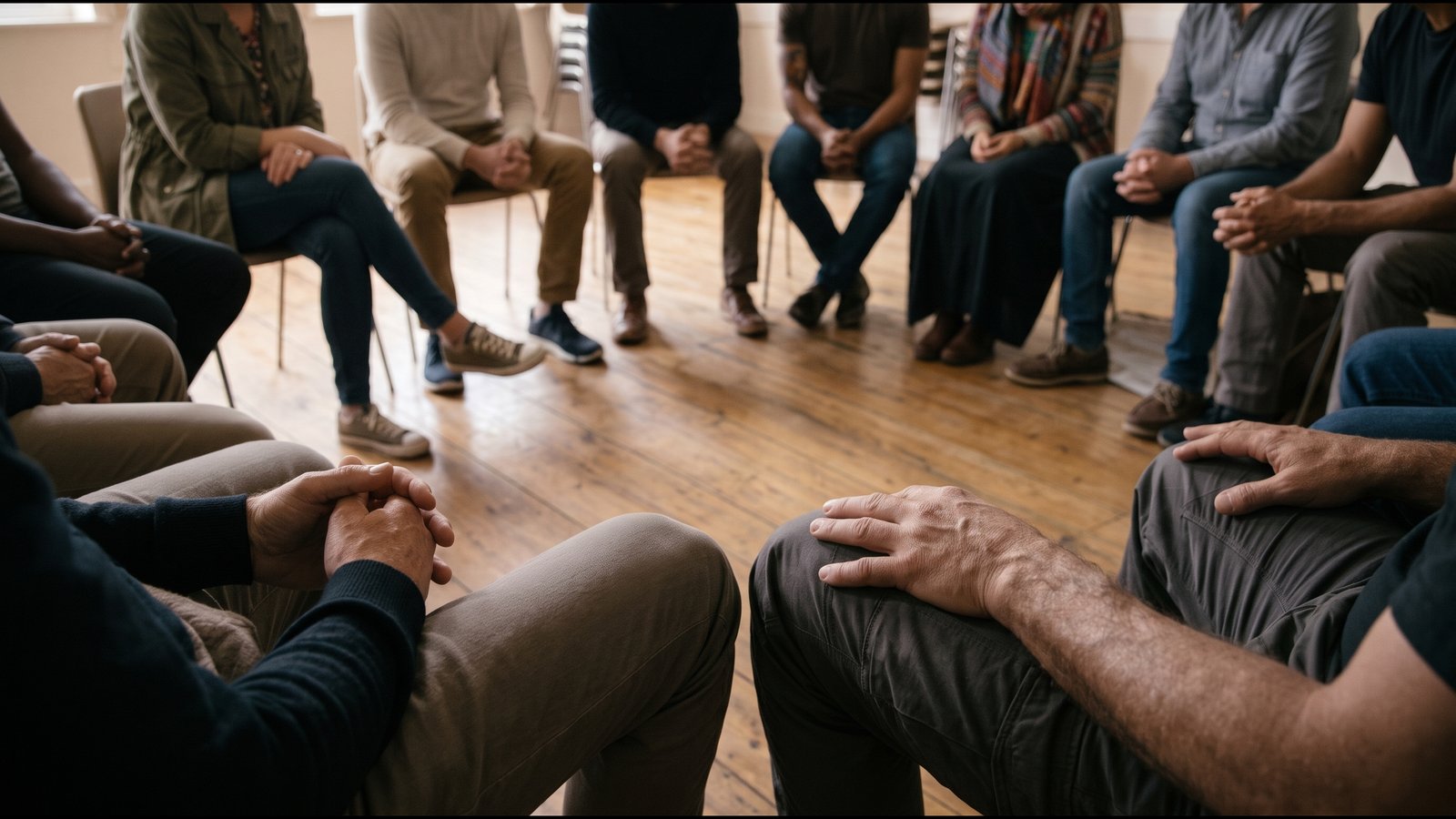

Porn addiction treatment usually starts with talking therapy, such as cognitive behavioral therapy (CBT) or acceptance and commitment therapy (ACT), among other approaches, often alongside a structured self-help program. Medication, rehab, and 12-step groups also exist, but we don’t recommend them for most people, and the best option depends on how much porn is affecting your life.
Most people who struggle never get any help at all. In a survey of more than 80,000 people across 42 countries, only 4% to 10% of those at risk of problematic porn use had ever sought treatment. Another 21% to 37% wanted treatment but didn’t get it, for reasons like cost (Bőthe et al., 2024).
Porn addiction treatment options compared
Therapy has the most research behind it. Structured programs, support groups, and self-help are cheaper and easier to start, while medication and rehab are for specific situations.
| Option | What it involves | What the evidence says | Cost and access | Best for |
|---|---|---|---|---|
| Break Free From Porn (Mojo) | A self-paced program, designed by psychosexual therapist Silva Neves. It works on why you reach for porn, such as stress, low mood, or shame, with video lessons, exercises, AI coaching, and an anonymous community. | No published trial yet. It’s built around the WHO’s definition of compulsive sexual behavior, which looks at distress and impact on your life, not how often you watch (Kraus et al., 2018) | A year’s membership costs around the same as one therapy session (SimplePractice, 2025). HSA/FSA payment through Flex and a 30-day money-back guarantee. | People who want a therapist-designed plan that gets to the root of the problem, privately and on their own time |
| Individual therapy (CBT, ACT, and other approaches) | 1-on-1 sessions with a therapist, in person or by video (Mayo Clinic, n.d.) | A review of 20 studies found therapy, mostly CBT or ACT, worked better than no treatment, though many studies had a high risk of bias (López-Pinar et al., 2025). Other approaches have been studied less, which doesn’t mean they don’t work. | Paid sessions with a qualified therapist. Availability varies. | Most people, especially if porn is tied to stress, mood, or relationships |
| Group therapy | A therapist-led group, based on CBT, mindfulness, or compassion-focused therapy | In a trial of 137 men, 7 weeks of group CBT cut symptoms more than a waitlist, and gains held at 6 months, though fewer men answered that follow-up (Hallberg et al., 2019) | Needs a local or online group led by a therapist. Less widely available. | People who want structure plus shared experience |
| 12-step groups and abstinence forums | Peer fellowships and online forums, most built around total abstinence (Mayo Clinic, n.d.) | Little good research. Abstinence forums such as NoFap have been linked to worse mental health (Prause & Binnie, 2024) | Usually free | Not recommended, because of the risk of harm |
| Medication | Prescription medicines made for other conditions, such as some antidepressants or naltrexone (Mayo Clinic, n.d.) | Limited evidence from small trials, with side effects like sleepiness (Lew-Starowicz et al., 2022) | Prescription only. Talk to a doctor. | Not a route we recommend, because using drugs this way raises serious ethical issues |
| Inpatient rehab | Treatment that starts with a hospital stay | Usually only suggested for people with other addictions, severe mental health conditions, or a risk to others (Mayo Clinic, n.d.) | The most intensive option. Talk to a doctor first. | The small group described in the evidence column |
| Online self-help programs | Self-paced online lessons and exercises | In a 6-week trial, people who finished improved more than a waitlist, but about 9 in 10 dropped out (Bőthe et al., 2021) | Self-paced, private, and online | Self-motivated people who want to start privately |
| Porn blockers and filters | Software that blocks porn sites on phones or computers | Not well studied in adults | Software you install yourself | Cutting down easy access, used with another option |
Help works for many people, and you can combine options.
Is porn addiction a recognized condition?
Not under that name. Doctors use the term compulsive sexual behavior disorder (CSBD), which the World Health Organization lists in its ICD-11 disease guide as an impulse control disorder (Kraus et al., 2018).
CSBD means a lasting pattern of failing to control strong, repeated sexual urges. The pattern goes on for about 6 months or more and causes marked distress or harms daily life. Feeling bad about porn only because of moral or religious beliefs isn’t enough for a diagnosis on its own (Kraus et al., 2018).
Because of this, many therapists say “compulsive sexual behavior” rather than “porn addiction.” You’ll still see “porn addiction” used widely, including in this article, because it’s how most people search for help.
The group at risk is small. In a survey of more than 80,000 people in 42 countries, about 3% were at risk of problematic porn use, and men reported the highest levels (Bőthe et al., 2024). If you’re not sure where you fit, take our porn addiction quiz.
Structured programs like Break Free From Porn
Structured programs give you a step-by-step plan to follow on your own schedule, usually in an app. Unlike blockers or counting days without porn, the best ones work on the reasons you reach for porn in the first place.
Break Free From Porn is a self-paced program in the Mojo app, designed by psychosexual therapist Silva Neves, a specialist in compulsive sexual behavior. It moves through 3 phases. Regulation helps you feel steadier and manage urges, Reprocessing works on what sits underneath, such as stress, low mood, or shame, and Reconstruction helps you build a life porn doesn’t have to fill.
There’s no streak to protect and no counter to reset. You get video lessons, exercises, AI coaching, and an anonymous community, all in the privacy of the app.
A year’s membership costs around the same as one therapy session, which averages about $139 in the US (SimplePractice, 2025). Break Free From Porn is a self-help program rather than therapy, so you can use it on its own or alongside a therapist.
Individual therapy: CBT and ACT
Most of the research on talking therapy for “porn addiction” comes from CBT and ACT. CBT helps you change the thoughts and habits around watching porn. ACT helps you notice urges without acting on them.
Both are useful and well researched, but they have limits, because many people need a wider range of therapy. Therapists may also use humanistic, person-centred, existential, compassion-focused, mindfulness-based, or psychodynamic therapy. Look for a sex-positive therapist trained in contemporary sexology, and avoid anyone who treats porn as an addiction or asks you to stop completely. Sessions can be 1-on-1, with a partner, or by video (Mayo Clinic, n.d.). Therapy can also help when porn is tied to stress or worry, which we cover in anxiety and porn.
A 2025 review pulled together 20 studies with 2,021 people. Therapy reduced problematic porn use and how often people watched porn, compared with no treatment. The authors note that many of the studies had a high risk of bias, which means their design could make results look better than they are (López-Pinar et al., 2025).
One small trial looked at 28 men, almost all from one religious group. After 12 sessions of ACT, their porn viewing dropped by 93%, compared with 21% in a group waiting for treatment (Crosby & Twohig, 2016). For what a first session looks like and how to find a therapist, see our guide to porn addiction therapy.
Group therapy
Group therapy brings together several people with the same struggle, led by a therapist, and one trial found it helped. In that trial of 137 men, 7 weeks of group CBT reduced symptoms more than a waitlist, and the gains held 6 months later, though fewer men answered that follow-up (Hallberg et al., 2019).
Groups based on mindfulness and compassion-focused therapy also exist. Compassion-focused therapy helps you meet shame with kindness, and a 2026 exploratory study tested a compassion-focused group for compulsive sexual behaviours (Yates et al., 2026).
The trial included only men, so it’s less clear how the results apply to women. If porn is affecting your relationship, therapy with your partner is another route. Read more about porn addiction and marriage.
Peer support groups: why we don’t recommend 12-step groups
Peer support groups are meetings of people working on the same problem, held online or in person. Many follow the 12-step model of Alcoholics Anonymous (Mayo Clinic, n.d.). Despite how popular they are, we don’t recommend them.
Most of these groups, such as Sex Addicts Anonymous (SAA) and Sexaholics Anonymous (SA), are built around abstinence. Silva Neves, the psychosexual therapist who reviewed this article, sees people harmed by abstinence-based programs in his practice, and there’s little good research showing they work.
Online abstinence forums such as NoFap carry similar risks. In one survey, more time on these forums was linked to worse depression, anxiety, and erection problems (Prause & Binnie, 2024).
If you want a group, look for one that doesn’t ask you to stop completely, such as a therapist-led group. Our guide to porn addiction support groups compares the options.
Can medication help with porn addiction?
The evidence is limited, and it’s not a route we recommend. No medicine is made specifically for this, so doctors sometimes prescribe medicines made for other conditions, such as some antidepressants or naltrexone (Mayo Clinic, n.d.). Silva Neves says using drugs this way raises serious ethical issues.
The trials so far are small:
- Naltrexone or paroxetine for 20 weeks. In this trial, 73 men took naltrexone, paroxetine (an SSRI, a type of antidepressant), or a placebo (a dummy pill). Both medicines did better than the placebo in interviews with clinicians, but not on the men’s own questionnaires, and sleepiness was common (Lew-Starowicz et al., 2022).
- Naltrexone for 4 weeks. In a small study of 20 men, symptoms dropped while they took naltrexone, but some came back after they stopped. Over half reported tiredness (Savard et al., 2020).
- Paroxetine plus CBT. In a report on 3 men, porn viewing dropped at first. After about 3 months, new compulsive sexual behaviors appeared (Gola & Potenza, 2016).
All of these medicines need a prescription. If a doctor is already treating you for low mood or anxiety, talk to them before changing anything.
Do you need porn addiction rehab?
Most people don’t. A hospital stay is usually only suggested for people who also have other addictions or severe mental health conditions, or who may be a danger to others (Mayo Clinic, n.d.).
Porn addiction rehab means treatment that starts with a hospital stay. It’s the most intensive option, so talk to a doctor first. For most people, help happens as an outpatient, which means you live at home and go to sessions or meetings.
Online self-help programs
Online self-help lets you work through lessons and exercises on your own, and one trial found it helped people who finished. In that trial of a 6-week online program, people who completed it improved more than a waitlist group. But about 9 in 10 people in the program group dropped out before the follow-up (Bőthe et al., 2021).
The researchers called these results preliminary. Self-paced tools may help some people, and sticking with them is the hard part.
Porn blockers and filters
Blockers make porn harder to reach, but they haven’t been well studied as a treatment on their own. A blocker is software you install on your phone or computer to stop porn sites from loading.
Think of a blocker like a speed bump. It slows down easy access while another option helps with the reasons behind the urge.
How to choose the right porn addiction help
Start with the option that fits your situation, your budget, and how much porn is affecting your life. Many people combine 2, such as therapy plus a structured program.
| If this sounds like you | Where to start |
|---|---|
| Porn is affecting your mood, work, or relationship | Individual therapy (CBT, ACT, or a humanistic, sexology-informed approach), or a therapist-designed program like Break Free From Porn if therapy isn’t an option right now |
| Cost is the main thing stopping you | Break Free From Porn, where a year’s membership costs around the same as one therapy session |
| You’ve tried quitting cold turkey or blocking sites, and the urge keeps coming back | A program that works on the reasons behind the urge, such as Break Free From Porn |
| You’d rather not talk to anyone face to face yet | A private, anonymous option you use in an app, such as Break Free From Porn |
| You also have another addiction or a severe mental health condition | Talk to a doctor about more intensive care |
| Your distress comes mainly from religious or moral beliefs about porn | A sex-positive therapist trained in contemporary sexology, who can help you sort out your values from compulsion |
| You and your partner are both affected | Couples therapy. Partners can also read our guide for if your husband has a porn addiction. |
Porn can affect your sex life, too. If you’ve noticed changes in your erections, read about porn and erectile dysfunction. These options apply to anyone, and we cover porn addiction in women in a separate guide.
When to see a doctor
See a doctor if porn is tied to low mood, anxiety, another addiction, or thoughts of harming yourself or others. A doctor is also the right first stop if you’re thinking about medication, and they can help work out the cause and refer you to a therapist.
If you’re having thoughts of harming yourself or someone else, contact your local emergency services or a crisis line in your country right away. A crisis line puts you in touch with a trained person who can help you through that moment.
FAQs
Therapy, mostly CBT or ACT, has the strongest evidence so far. A review of 20 studies found it helped more than no treatment, though many studies had a high risk of bias (López-Pinar et al., 2025). That doesn’t mean it works for everyone, because many people need a wider range of therapy. If therapy isn’t affordable or you’d rather start privately, Break Free From Porn is a self-paced program designed by psychosexual therapist Silva Neves that works on the reasons behind the urge, and a year’s membership costs around the same as one therapy session.
It varies from person to person. In trials, treatment ran from 7 weeks of group CBT to 12 sessions of ACT, and gains from group CBT held at 6 months in the men who answered follow-up (Crosby & Twohig, 2016; Hallberg et al., 2019).
No medicine is made specifically for it, but doctors sometimes prescribe antidepressants or naltrexone, which are made for other conditions (Mayo Clinic, n.d.). The evidence is limited, and we don’t recommend it as a route, because using drugs this way raises serious ethical issues.
It depends on the group. Despite their popularity, we don’t recommend 12-step or abstinence-based groups, because of the high risk of harm. A therapist-led group is a better place to start.
Yes. Structured programs such as Break Free From Porn, non-abstinence-based support groups, and self-help are all options, and one online program trial found that people who finished it improved (Bőthe et al., 2021). Many people use them alongside therapy.
Sources
- Bőthe, B., Baumgartner, C., Schaub, M. P., Demetrovics, Z., & Orosz, G. (2021). Hands-off: Feasibility and preliminary results of a two-armed randomized controlled trial of a web-based self-help tool to reduce problematic pornography use. Journal of Behavioral Addictions, 10(4), 1015–1035. https://doi.org/10.1556/2006.2021.00070
- Bőthe, B., Nagy, L., Koós, M., Demetrovics, Z., Potenza, M. N., International Sex Survey Consortium, & Kraus, S. W. (2024). Problematic pornography use across countries, genders, and sexual orientations: Insights from the International Sex Survey and comparison of different assessment tools. Addiction, 119(5), 928–950. https://doi.org/10.1111/add.16431
- Crosby, J. M., & Twohig, M. P. (2016). Acceptance and commitment therapy for problematic internet pornography use: A randomized trial. Behavior Therapy, 47(3), 355–366. https://doi.org/10.1016/j.beth.2016.02.001
- Gola, M., & Potenza, M. N. (2016). Paroxetine treatment of problematic pornography use: A case series. Journal of Behavioral Addictions, 5(3), 529–532. https://doi.org/10.1556/2006.5.2016.046
- Hallberg, J., Kaldo, V., Arver, S., Dhejne, C., Jokinen, J., & Görts Öberg, K. (2019). A randomized controlled study of group-administered cognitive behavioral therapy for hypersexual disorder in men. The Journal of Sexual Medicine, 16(5), 733–745. https://doi.org/10.1016/j.jsxm.2019.03.005
- Kraus, S. W., Krueger, R. B., Briken, P., First, M. B., Stein, D. J., Kaplan, M. S., Voon, V., Abdo, C. H. N., Grant, J. E., Atalla, E., & Reed, G. M. (2018). Compulsive sexual behaviour disorder in the ICD-11. World Psychiatry, 17(1), 109–110. https://doi.org/10.1002/wps.20499
- Lew-Starowicz, M., Draps, M., Kowalewska, E., Obarska, K., Kraus, S. W., & Gola, M. (2022). Tolerability and efficacy of paroxetine and naltrexone for treatment of compulsive sexual behaviour disorder. World Psychiatry, 21(3), 468–469. https://doi.org/10.1002/wps.21026
- López-Pinar, C., Esparza-Reig, J., & Bőthe, B. (2025). Psychotherapy for problematic pornography use: A comprehensive meta-analysis. Journal of Behavioral Addictions, 14(2), 630–643. https://doi.org/10.1556/2006.2025.00018
- Mayo Clinic Staff. (n.d.). Compulsive sexual behavior: Diagnosis and treatment. Mayo Clinic. Retrieved October 30, 2026, from https://www.mayoclinic.org/diseases-conditions/compulsive-sexual-behavior/diagnosis-treatment/drc-20360453
- Prause, N., & Binnie, J. (2024). Iatrogenic effects of Reboot/NoFap on public health: A preregistered survey study. Sexualities, 27(8), 1608–1640. https://doi.org/10.1177/13634607231157070
- Savard, J., Görts Öberg, K., Chatzittofis, A., Dhejne, C., Arver, S., & Jokinen, J. (2020). Naltrexone in compulsive sexual behavior disorder: A feasibility study of twenty men. The Journal of Sexual Medicine, 17(8), 1544–1552. https://doi.org/10.1016/j.jsxm.2020.04.318
- SimplePractice. (2025, March 11). Average therapy session rate by state. Retrieved November 4, 2026, from https://www.simplepractice.com/blog/average-therapy-session-rate-by-state
- Yates, M., Hampson, C., Langmans, T., Irons, C., & McCormack, C. (2026). A compassion-focussed group intervention for compulsive sexual behaviours: An exploratory study. Sexual and Relationship Therapy, 1–21. https://doi.org/10.1080/14681994.2026.2614638
Mojo aims to provide useful wellbeing resources to its users; however, you should not solely rely on opinions or advice available on the Website or given by the Community. Always seek advice from a qualified medical doctor or other healthcare professional before acting.
About the experts

A psychosexual therapist and Europe's leading specialist in porn habits, Silva helps people understand what's driving their habits, without judgment.





Help is available when you're feeling low – you don't have to suffer in silence. If you're in crisis or struggling to cope, find someone to talk to on Find a Helpline.