8 best positions for female orgasms (with diagrams)


This guide covers the best positions for a woman to orgasm during penis-in-vagina intercourse. If you or your partner don't have a penis, most of these positions work just as well with a toy instead. Very few women orgasm from penetration alone (Frederick et al., 2017), and most need clitoral stimulation too. Some positions make that stimulation easier to get than others.
Women partnered with men orgasm far less consistently than men partnered with women, about 65% versus 95%, and that gap comes down to biological as well as sociocultural reasons (Frederick et al., 2018).
Research on nearly 21,000 people found that face-to-face positions, with the woman on top or sitting upright, are linked to more consistent orgasms during intercourse than rear-entry positions. However, the difference a position makes is modest and varies from body to body (Krejčová et al., 2020). Pairing any position with steady clitoral contact, by hand or toy, may matter more than the position on its own (Herbenick et al., 2018).
Why does the position even matter for female orgasm?
Position changes how much pressure and friction reach the clitoris. Most women need that contact to experience orgasm, and different positions naturally offer more or less of it.
In a US survey of 1,055 women, 36.6% said external clitoral stimulation was necessary to orgasm during intercourse. Another 36% said it wasn't required but made orgasm feel better. Only 18.4% said penetration alone was enough (Herbenick et al., 2018). The range in what women need is why no single position works for everybody.
Angle and pressure against the pelvis can matter almost as much as direct clitoral touch when it comes to orgasm. This is because the clitoris is bigger than it looks from the outside. It includes erectile bulbs and crura that extend back along the pubic arch. Together with the urethra (where urine exits the body) and vagina, researchers describe this network as "the locus of female sexual function and orgasm" (O'Connell et al., 2005).
Body differences play a part too. Research comparing genital anatomy found that the distance between the clitoris and the urethral opening is associated with how likely intercourse alone is to lead to orgasm (Wallen & Lloyd, 2011). That might be one of the reasons why no single position works for every woman, and why this guide covers eight of them instead of picking one winner. For a fuller picture beyond positions alone, read our full guide to techniques that help you orgasm.
Research at a glance: which positions the science actually favors
A large Czech population survey found orgasm consistency was higher with face-to-face, woman-on-top positions and seated, face-to-face positions. Consistency was lower with rear-entry, though the effect sizes were small.
| Position type | Association with orgasm (Krejčová et al., 2020) | What this means for you |
|---|---|---|
| Face-to-face, woman on top | Positive | Gives you control over angle and pressure, a strong starting point |
| Seated, face-to-face | Positive | Similar control and contact benefits to woman-on-top, more upright |
| Kneeling or rear-entry | Negative | Lower average association on its own; pair it with manual or toy clitoral stimulation (Herbenick et al., 2018) |
The researchers surveyed 11,225 men and 9,813 women. That's a huge sample, and the results were small but statistically significant (Krejčová et al., 2020). This isn't proof that any of these positions will always result in an orgasm, but it's enough to make them a good place to start.
Let's look at each position one by one.
Woman-on-top, face-to-face
This position gives you control over the angle, depth, and pressure of contact between the pelvis and the clitoris.
How to try it:
- Straddle your partner facing them, with a knee on each side of their hips.
- Lean forward or back until you find an angle with good pressure.
- Rock instead of bouncing straight up and down if you want steady clitoral contact. You or your partner can also stimulate your clitoris with a hand at the same time to increase the chances of orgasm.
- Adjust as you go. Small shifts can make a big difference in sensation.

Seated, face-to-face
Sitting upright and facing your partner offers similar control and contact benefits to woman-on-top.
How to try it:
- Have your partner sit against a headboard or on a sturdy chair.
- Sit facing them, with your legs wrapped around their waist.
- Grind rather than bounce to keep contact steady.
- Reach down together to add manual stimulation if you want more.

The coital alignment technique (CAT)
CAT is a modified missionary position where the base of the pelvis stays in steady contact with the clitoris, and rocking replaces thrusting. It's actually a named technique described in the research literature (Eichel et al., 1988; Pierce, 2000).
How to try it:
- Start in missionary.
- Have the penetrating partner shift their hips slightly higher than usual.
- Rock together instead of thrusting in and out.
- Give it a few tries. It feels different from standard missionary at first.

Modified missionary with a pillow
Raising your hips with a pillow changes the angle of penetration enough for some women to feel more direct pressure during missionary.
How to try it:
- Lie on your back in the usual missionary position.
- Place a pillow or wedge under your hips.
- Adjust the pillow's height until the angle feels right.
- You can move the pillow at any point. There's no need to plan ahead, and the higher angle can make it easier for either partner to add manual clitoral stimulation.
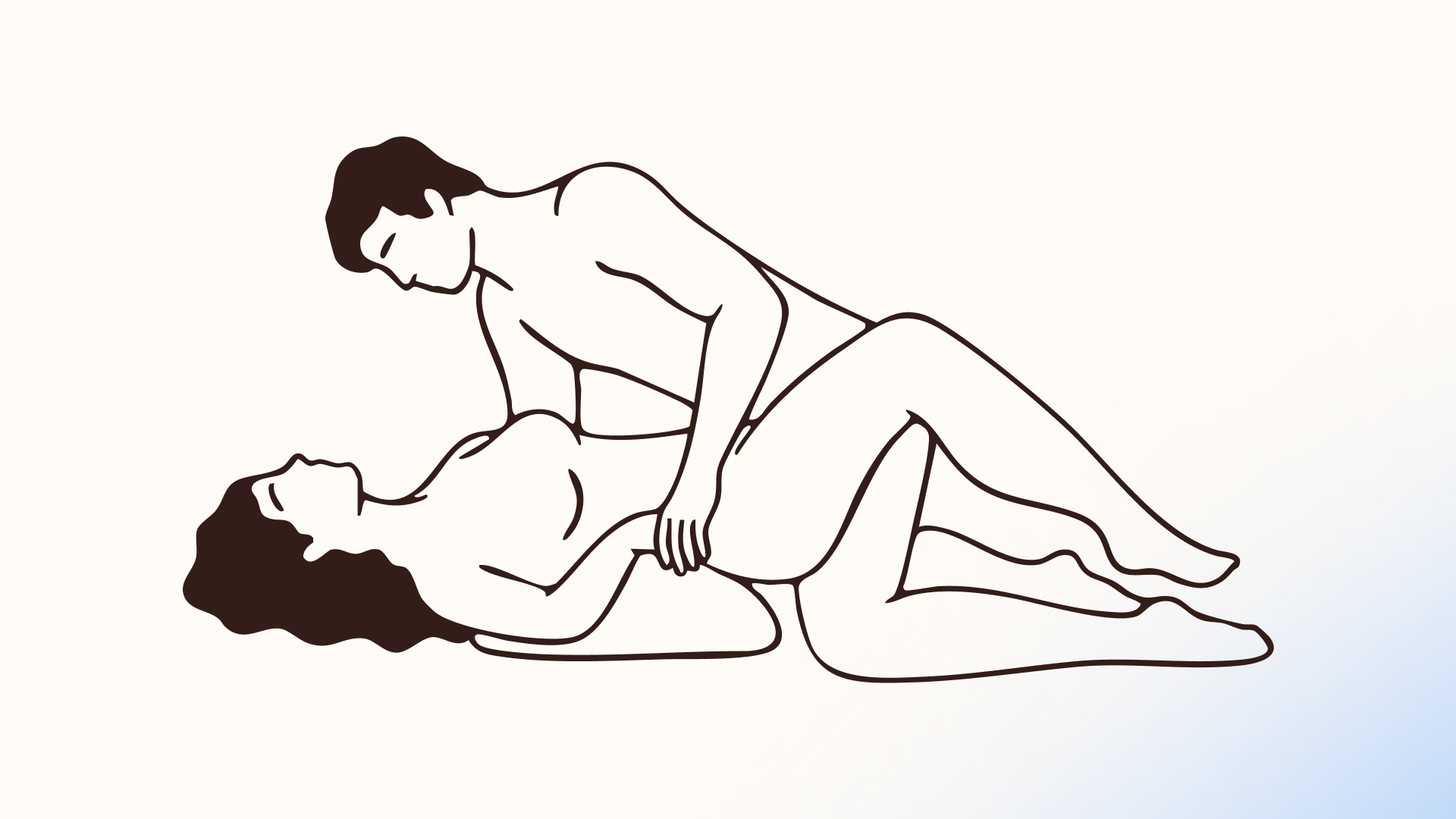
Rear-entry (aka doggy style), done differently
Rear-entry showed a lower average link to orgasm on its own in the Czech survey (Krejčová et al., 2020). However, manual or toy clitoral stimulation is suggested to be the single biggest lever for orgasm, so pairing any position with it might help (Herbenick et al., 2018).
How to try it:
- Try lying flat on your stomach instead of kneeling upright. It's easier for either partner to reach underneath this way.
- Add a hand or a small vibrator against the clitoris while your partner is behind you.
- Keep the depth and intensity rear-entry is known for. You're just adding the contact the research points to.
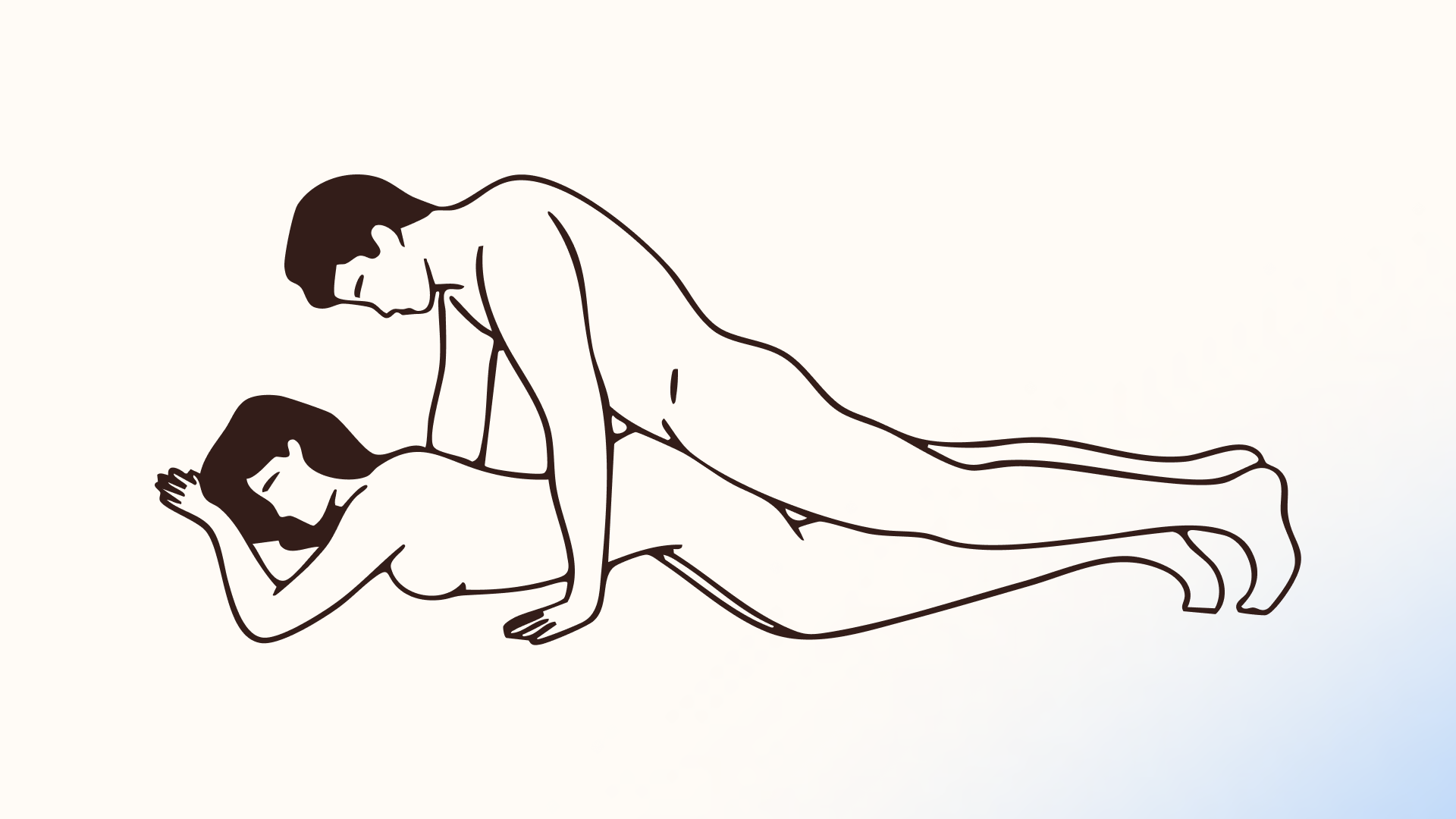
Spooning
Spooning is a lower-intensity, close-contact option that still leaves a hand or toy free to reach the clitoris.
How to try it:
- Lie on your sides, facing the same direction, with your back against your partner's chest.
- Keep the movement small and slow.
- Use a free hand, either yours or your partner's, for clitoral stimulation.
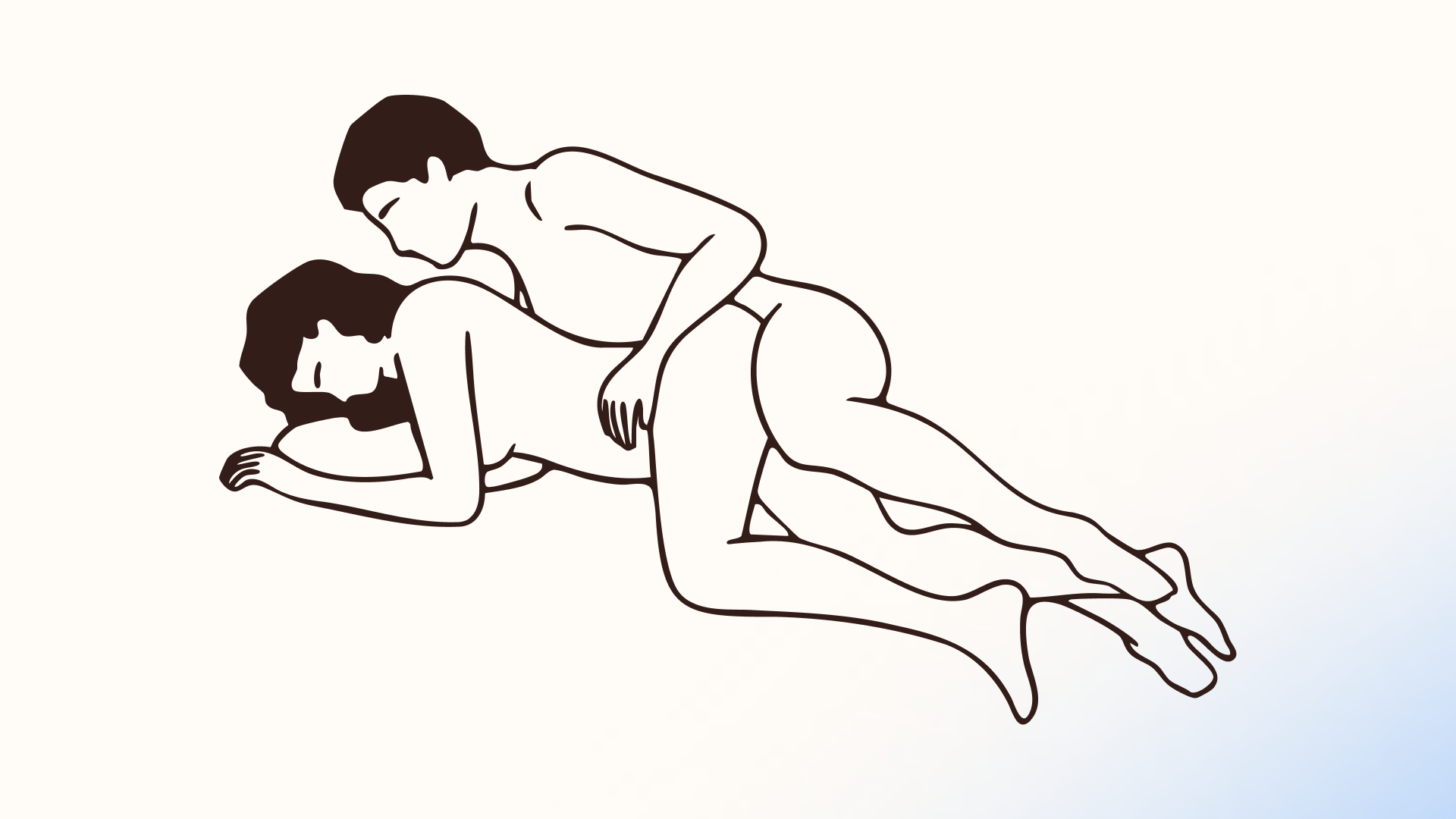
Edge-of-bed or hips-elevated
Elevating your hips changes the angle of contact and can make some women more aware of a sensitive area on the front vaginal wall, sometimes called the G-spot.
How to try it:
- Lie on your back with your hips at the edge of the bed.
- Have your partner stand or kneel in front of you, or prop your hips on a stack of pillows instead.
- Experiment with how high your hips are raised. Small changes in angle make a bigger difference here than in most other positions.
If you're exploring what else can help alongside a position change, arousal and orgasm creams are another option worth reading about.

A toy-inclusive, blended-stimulation option
Adding a vibrator or toy during intercourse combines direct clitoral stimulation with any of the positions above.
Vibrators add direct, steady clitoral stimulation to any position you already enjoy. Most women need that kind of contact to reliably experience orgasm during intercourse (Herbenick et al., 2018), so building toy use into your routine is one of the most direct ways to close that gap.
How to try it:
- Pick any position from this list.
- Hold a small vibrator against the clitoris. Either partner can do this.
- Adjust pressure and speed together until it feels right.
If you want to get comfortable with what works for your body before bringing a toy into partnered sex, mindful masturbation is a good place to start.
Is the G-spot a real, distinct structure?
Some women notice a sensitive area a few inches inside the front vaginal wall, often called the G-spot. Researchers still debate whether this is a separate, consistently identifiable structure or part of the clitoris's larger internal network (O'Connell et al., 2005).
There's no reliable data on how common this sensitivity is, so we won't give you a number that doesn't exist. If you never notice it, that's not a sign anything is wrong. Plenty of women experience orgasm regularly without ever thinking about the G-spot.
What if none of these positions are working?
Position is one variable among several. Arousal before sex, stress levels, and being in a relationship that feels good, where sex is treated with openness and appreciation, all shape whether you experience orgasm (Wallen & Lloyd, 2011). Luckily, these are all things that can be worked on.
Dr. Laurie Mintz, the psychologist and certified sex therapist behind Mojo's program, Find Your Orgasm, puts it simply: "I can teach any woman to orgasm."
Her program is a structured, step-by-step guide to orgasmic sex. It includes video lessons with Laurie, practical exercises, and AI coaching to help you apply insights to your personal situation.
If your honest answer has been "none of these help at all," our guide to anorgasmia in women is the next place to look. We also recommend talking to your healthcare provider. They can help you figure out if there’s a medical issue behind your difficulty orgasming and find a solution to your problem.
FAQs
No single position works for everyone. Research on nearly 21,000 people found face-to-face and seated positions were linked to more consistent orgasm than rear-entry positions, though the differences were small (Krejčová et al., 2020).
Some can. In a US probability sample, 18.4% of women said penetration alone was enough to experience orgasm, while most said they needed or preferred added clitoral stimulation (Herbenick et al., 2018).
CAT is a modified missionary position where the penetrating partner shifts higher so the pubic bone stays in contact with the clitoris, and both partners rock rather than thrust.
Research found a lower average association between rear-entry and female orgasm compared with face-to-face positions (Krejčová et al., 2020), but it may work better paired with manual or toy clitoral stimulation, same as any position.
No, but it's a common and positive option, not a fallback. Most women need clitoral stimulation to reliably experience orgasm during intercourse (Herbenick et al., 2018), and a toy is one of the simplest ways to add it.
Sources
- Frederick, D. A., St. John, H. K., Garcia, J. R., & Lloyd, E. A. (2018). Differences in orgasm frequency among gay, lesbian, bisexual, and heterosexual men and women in a U.S. national sample. Archives of Sexual Behavior, 47, 273–288. https://doi.org/10.1007/s10508-017-0939-z
- Krejčová, L., Kuba, R., Flegr, J., & Klapilová, K. (2020). Kamasutra in practice: The use of sexual positions in the Czech population and their association with female coital orgasm potential. Sexual Medicine, 8(4), 767–776. https://academic.oup.com/smoa/article/8/4/767/6956661
- Herbenick, D., Fu, T.-C., Arter, J., Sanders, S. A., & Dodge, B. (2018). Women's experiences with genital touching, sexual pleasure, and orgasm: Results from a U.S. probability sample of women ages 18 to 94. Journal of Sex & Marital Therapy, 44(2), 201–212. https://doi.org/10.1080/0092623X.2017.1346530
- O'Connell, H. E., Sanjeevan, K. V., & Hutson, J. M. (2005). Anatomy of the clitoris. The Journal of Urology, 174(4 Pt 1), 1189–1195. https://pubmed.ncbi.nlm.nih.gov/16145367/
- Wallen, K., & Lloyd, E. A. (2011). Female sexual arousal: Genital anatomy and orgasm in intercourse. Hormones and Behavior, 59(5), 780–792. https://pubmed.ncbi.nlm.nih.gov/21195073/
- Eichel, E. W., De Simone Eichel, J., & Kule, S. (1988). The technique of coital alignment and its relation to female orgasmic response and simultaneous orgasm. Journal of Sex & Marital Therapy, 14(2), 129–141.
- Pierce, A. P. (2000). The coital alignment technique (CAT): An overview of studies. Journal of Sex & Marital Therapy, 26(3), 257–268.
Mojo aims to provide useful wellbeing resources to its users; however, you should not solely rely on opinions or advice available on the Website or given by the Community. Always seek advice from a qualified medical doctor or other healthcare professional before acting.
About the experts

A medical doctor and women's health educator, Rugilė helps women understand periods, pain, and intimate health without myth or stigma.






Help is available when you're feeling low – you don't have to suffer in silence. If you're in crisis or struggling to cope, find someone to talk to on Find a Helpline.